Leave suitable grass clippings on the lawn
Why this can help
Returning suitable clippings recycles nutrients on the lawn and reduces the material that needs collecting. It can reduce fertiliser needs under suitable management.
One possible next step
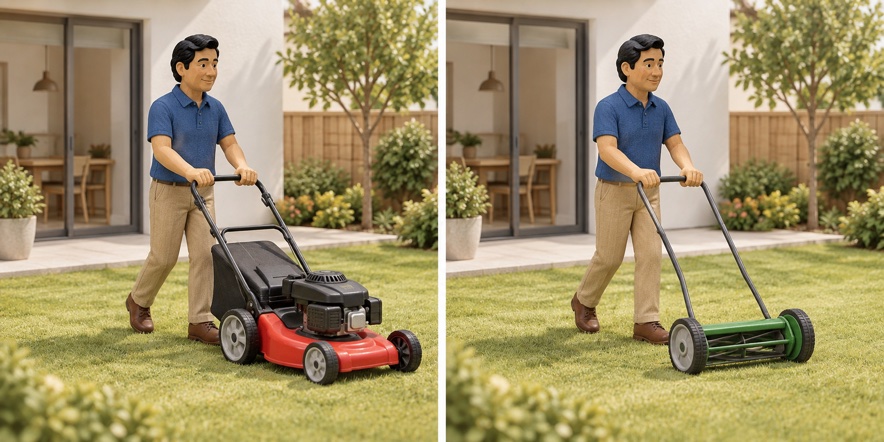
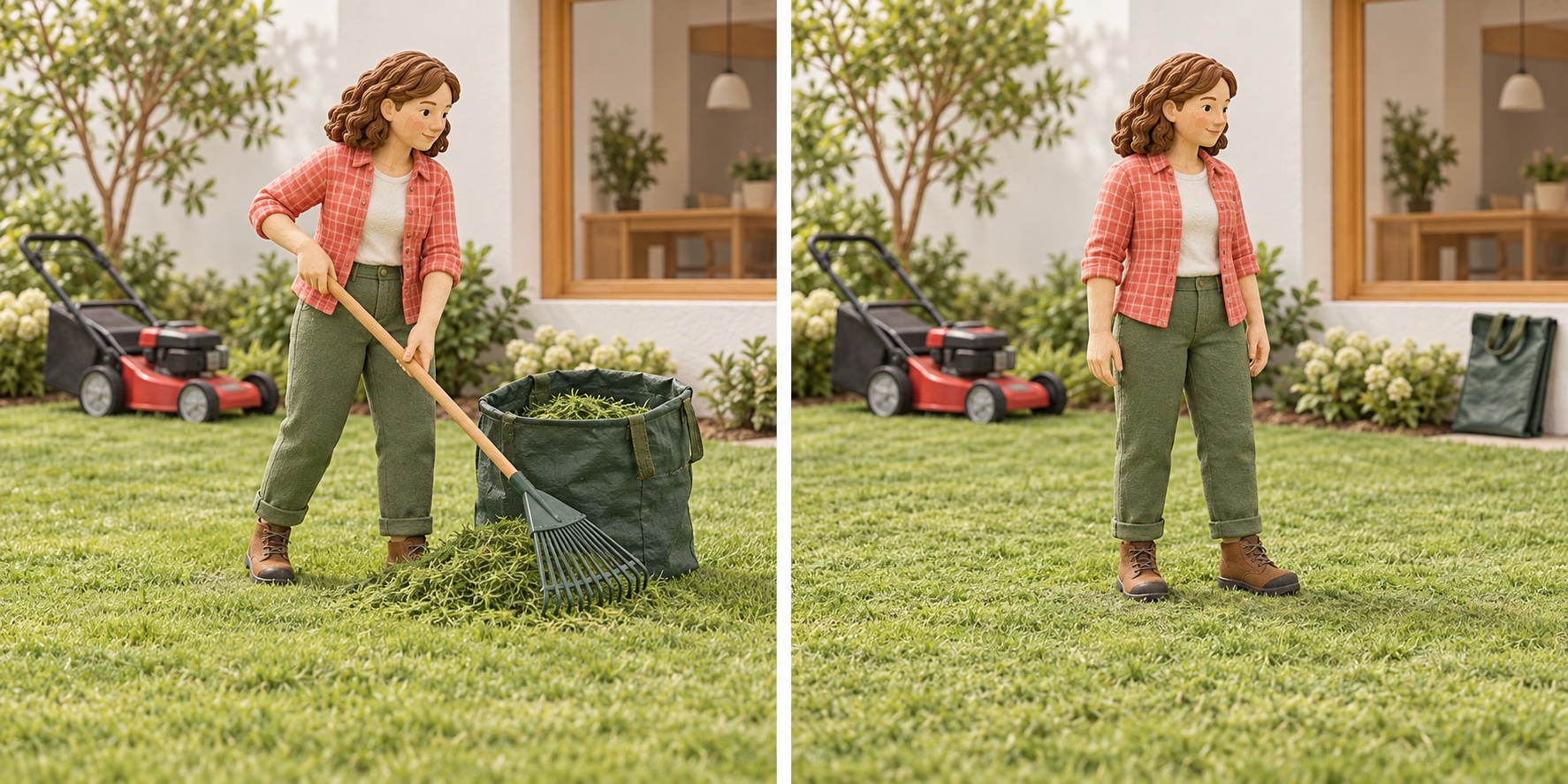
Check the mower’s approved mulching or grass-return setup; keep the bag fitted if safety requires it. After a suitable dry cut, leave short healthy clippings evenly spread, remove wet or diseased clumps and keep drains clear.
What changes the outcome
Use only a manufacturer-approved mulching or grass-return setup; keep the collection bag fitted whenever safe operation requires it. Collect wet clumps, excessive or heavily diseased clippings; keep drains clear. The calculator counts fresh material no longer collected, not carbon saved or waste prevented from growing. Treatment destination and fertiliser changes require separate evidence.
Your illustrative scenario
Over one year · with the assumptions below
You
50 kg of fresh clippings collected less
You + 10 friends
550 kg of fresh clippings collected less
1,000 participants
50,000 kg of fresh clippings collected less
These are scenarios, not measured personal or collective savings. One separate household per participant. People sharing a home count it once, not once each.
Your inputs
- Fresh clippings collected per cut before
- 3 kg
- Fresh clippings still collected per cut
- 0.5 kg
- Comparable cuts in a year
- 20
Calculation of the difference: (3 − 0.5) kg × 20 = 50 kg of fresh clippings collected
Calculation boundaries
Fresh clipping mass no longer collected from the same lawn, measured at similar moisture and growth conditions. This is material retained on site, not prevented grass growth, dry biomass, permanent carbon storage or avoided landfill. Count necessary removals and the shared lawn once.
The 3 kg before, 0.5 kg after and 20 cuts are editable examples, not published grass yields. Compare the same area and growth conditions and weigh fresh clippings at similar moisture. Keep necessary removals in the after value.
Sources and calculation references
- What to do with lawn clippingsSam Bauer, Julie Weisenhorn, Bob Mugass and Brad Pedersen; University of Minnesota Extension · 2024
- Choose the right lawn mower for your yardKym Pokorny, with Alec Kowalewski; Oregon State University Extension · 2025
- Contribution of grass clippings to turfgrass fertilization and soil water content under four nitrogen levelsGuillaume Grégoire, Rim Benjannet and Yves Desjardins · 2022
Read the method: universalizable.com/en/method/ · One sheet · print double-sided, long-edge binding