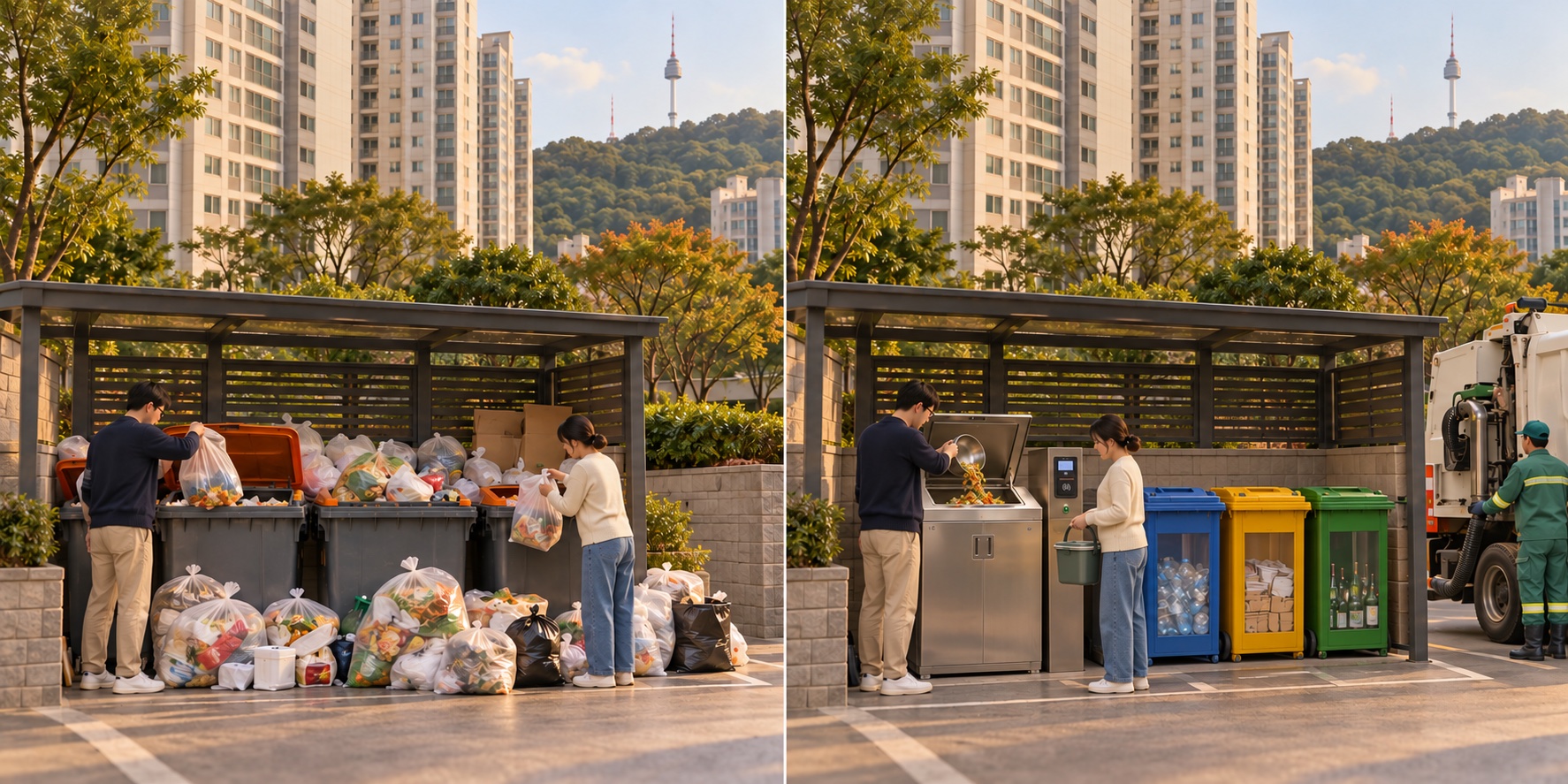
Illustrated comparison inspired by the place and case. Conceptual scenes, not a photographic before and after.
How the change works
- 01 / Public decision
Dedicated collection and treatment
- 02 / Physical change
Organic separated from residual waste
- 03 / Possible outcome
Resource recovery, where appropriate
Separating waste makes dedicated treatments possible; a quantity rate may also encourage less waste.
Research and local documents ↓What the evidence tells us
The Seoul system combines organic collection, different pricing systems and plants that recover resources, including compost, feed and biogas.
Conditions and limits
Not all organic matter becomes biogas. Harvesting and treatment require energy and controls; avoiding edible waste remains a priority.
Other possible benefits
A more readable collection and incentives to avoid waste.
Research and local documents
- Local document and reported findingSeoul Urban Solutions · collection and treatment of food waste ↗
The Seoul system combines organic collection, different pricing systems and plants that recover resources, including compost, feed and biogas.

