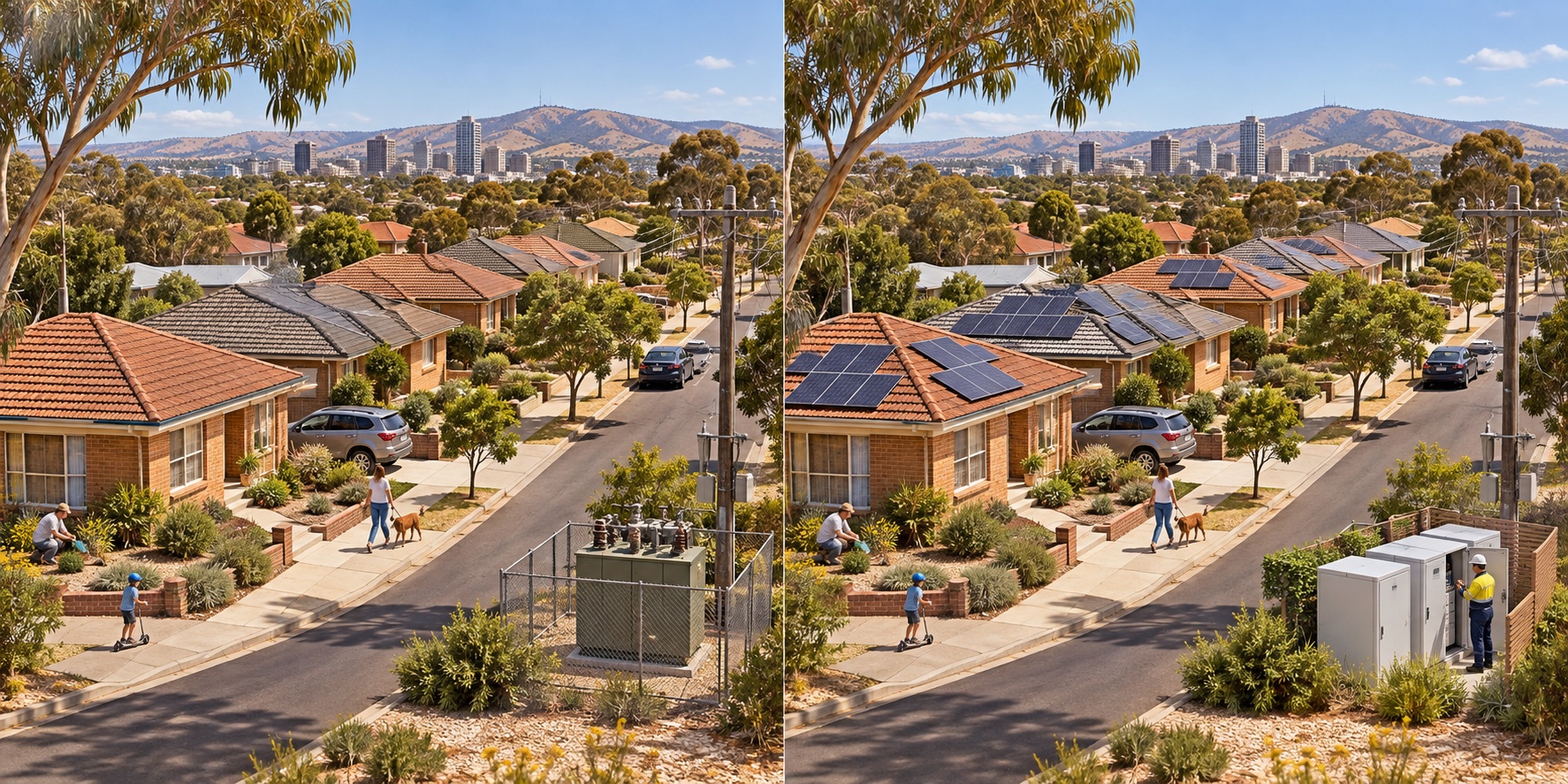
Illustrated comparison inspired by the place and case. Conceptual scenes, not a photographic before and after.
How the change works
- 01 / Public decision
Incentives, Connections, and Access
- 02 / Physical change
Solar production on existing buildings
- 03 / Possible outcome
Less production from other sources during solar hours
Connection rules and incentives may make it feasible to produce solar electricity on existing buildings.
Research and local documents ↓What the evidence tells us
The Clean Energy Regulator publishes data on installations registered in the Australian program, including by zip code.
Conditions and limits
The number of plants is not a direct measure of CO₂ avoided. Irradiation, self-consumption, the network, rent and access to capital influence who benefits.
Other possible benefits
Possible self-consumption and less exposure to bills.
Research and local documents
- Local document and reported findingClean Energy Regulator · Small-scale installation data ↗
The Clean Energy Regulator publishes data on installations registered in the Australian program, including by zip code.
- Scientific basis of the mechanismIPCC AR6 WGIII · Chapter 6: Energy Systems, 2022 ↗
Scientific synthesis on sources, networks and decarbonization of the energy system. It does not attribute personal CO₂ savings to the individual project.
