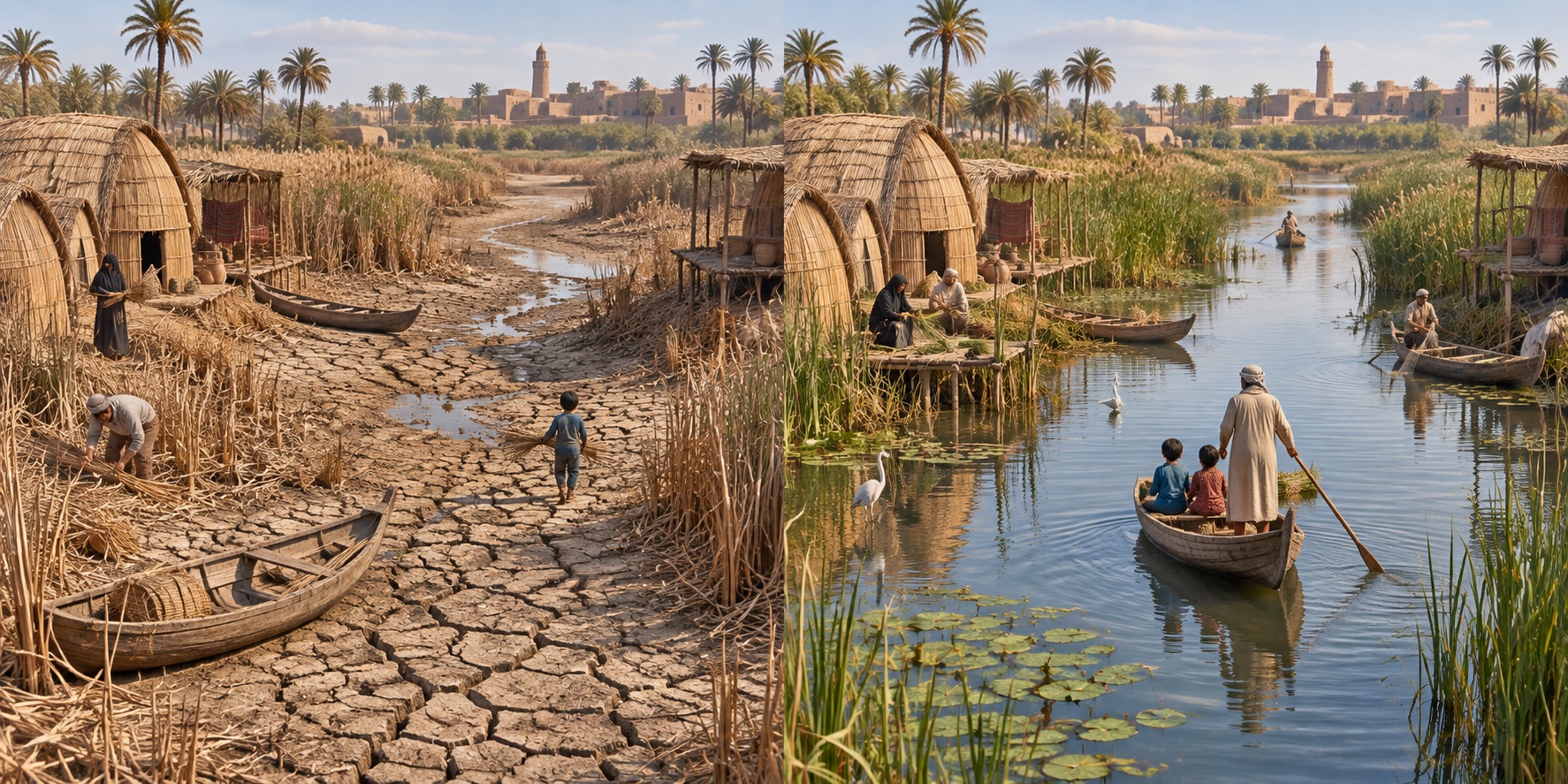
How the change works
- 01 / Public decision
Basin agreements
- 02 / Physical change
Water with adequate flow rates and salinity
- 03 / Possible outcome
Supported habitat and local life
Flooding a swamp can reactivate local habitats and activities, but flow rates and salinity must remain compatible with the ecosystem.
Research and local documents ↓What the evidence tells us
The ecological assessment of the Iraqi swamps documents a recovery after the reflooding started in 2003, also favored by hydrological conditions. Maintenance depends on the management of the basin.
Putting the choices into practice
Inflows
The challengeDry channels
The responseWater flows reaching the marshes
Quality
The challengeIgnored salinity
The responseControlled water
Duration
The challengeInitial reflooding only
The responseManagement over time
The diagram compares choices and conditions for putting them into practice. Measured outcomes and their limits are discussed in the evidence.
Research and local documents ↓Conditions and limits
A newly flooded surface does not guarantee permanent recovery. Drought, salinity and upstream decisions can reverse improvements.
Other possible benefits
Protection of wetland communities, traditional activities and biodiversity.
Research and local documents
- Local document and reported findingRichardson and Hussain, 2006 · Restoring the Garden of Eden: an ecological assessment of the marshes of Iraq ↗
Research on the case, mechanism, or measures discussed in the sheet.

