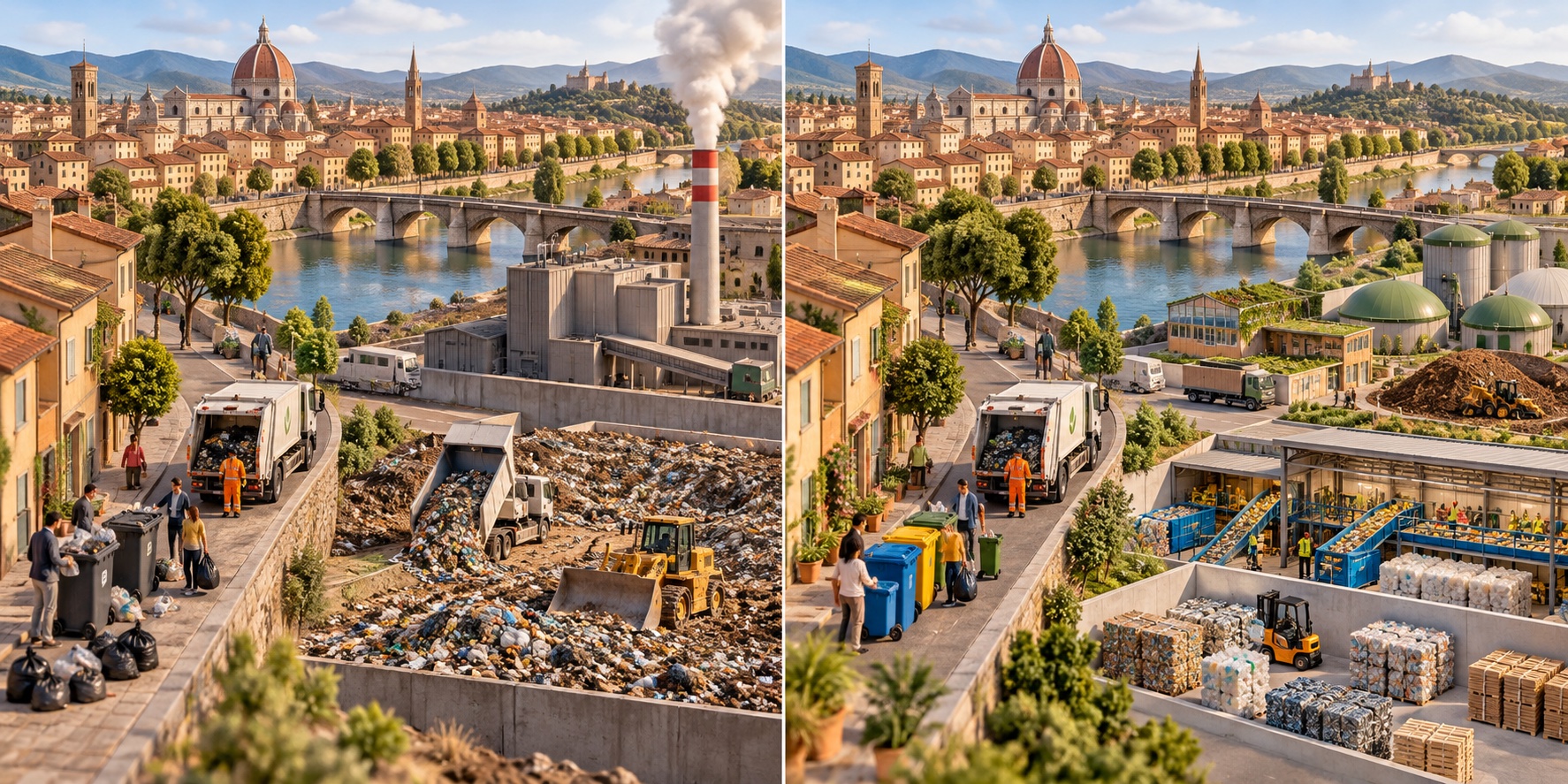
How the change works
- 01 / Public decision
System-wide objectives
- 02 / Physical change
Tracked destinations
- 03 / Possible outcome
Less waste of materials
Reducing landfill requires knowing where the materials go: prevention, recycling and incineration have different effects.
Research and local documents ↓What the evidence tells us
Eurostat statistics distinguish the treatment of municipal waste, allowing you to read the results without calling for recycling everything that does not end up in landfill.
Putting the choices into practice
Production
The challengePercentages only
The responseEven kilograms per inhabitant
Destination
The challengeAll treatment called recovery
The responseSeparate recycling and incineration
Priority
The challengeMove waste
The responsePrevent its production
The diagram compares choices and conditions for putting them into practice. Measured outcomes and their limits are discussed in the evidence.
Research and local documents ↓Conditions and limits
A low landfill use can coexist with a lot of incineration or with a high production of waste.
Other possible benefits
More transparent decisions on costs, facilities and recovery.
Research and local documents
- Local document and reported findingEurostat · Municipal waste statistics ↗
Official statistics with separate categories of municipal waste treatment.
- Scientific basis of the mechanismEEA · Diversion of waste from landfill in Europe ↗
Analysis of landfill trends. The perimeter of total waste must be distinguished from the urban one.

