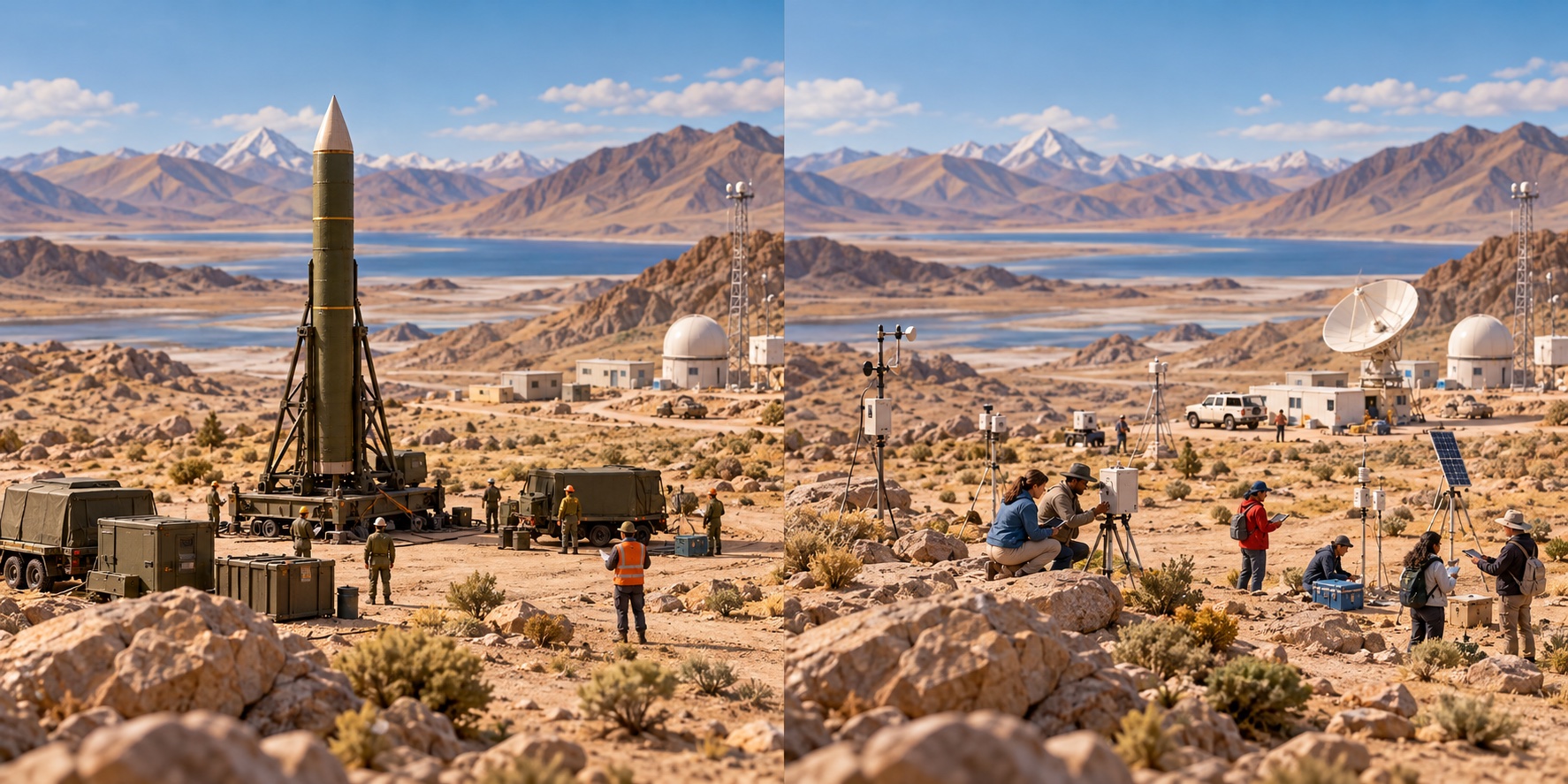
How the change works
- 01 / Public decision
International agreement
- 02 / Physical change
Limits and checks
- 03 / Possible outcome
Prevented contamination
Cooperation can prevent activities that spread contaminants across borders.
Research and local documents ↓What the evidence tells us
The 1963 treaty prohibits adherents from nuclear testing in the atmosphere, in space and under water. Scientific reconstructions show the dispersion of the fallout away from the sites.
The perimeter of an agreement
- 1963
Signing of the partial treaty
On August 5, the ban on tests in the atmosphere, in space and under water is signed.
- 1963
Entry into force
On October 10, the treaty comes into force for the first members.
- Scope
A ban that is still partial
Underground tests remain outside under the expected conditions and non-participating States.
Radioactive fallout is the subject of scientific measurements and reconstructions separated from the membership schedule.
Research and local documents ↓Conditions and limits
The partial treaty did not prohibit all underground tests and did not include every power. It doesn't eliminate every radioactive source.
Other possible benefits
Scientific cooperation and protection of distant populations.
Research and local documents
- Local project or policy documentUnited Nations · Treaty Banning Nuclear Weapon Tests, 1963 ↗
Text of the treaty, areas of the ban and conditions of membership.
- Evidence for this findingNational Cancer Institute · Nuclear weapons tests and fallout exposure ↗
Scientific reconstruction of repercussions and exposures; distinguishes sites and populations.