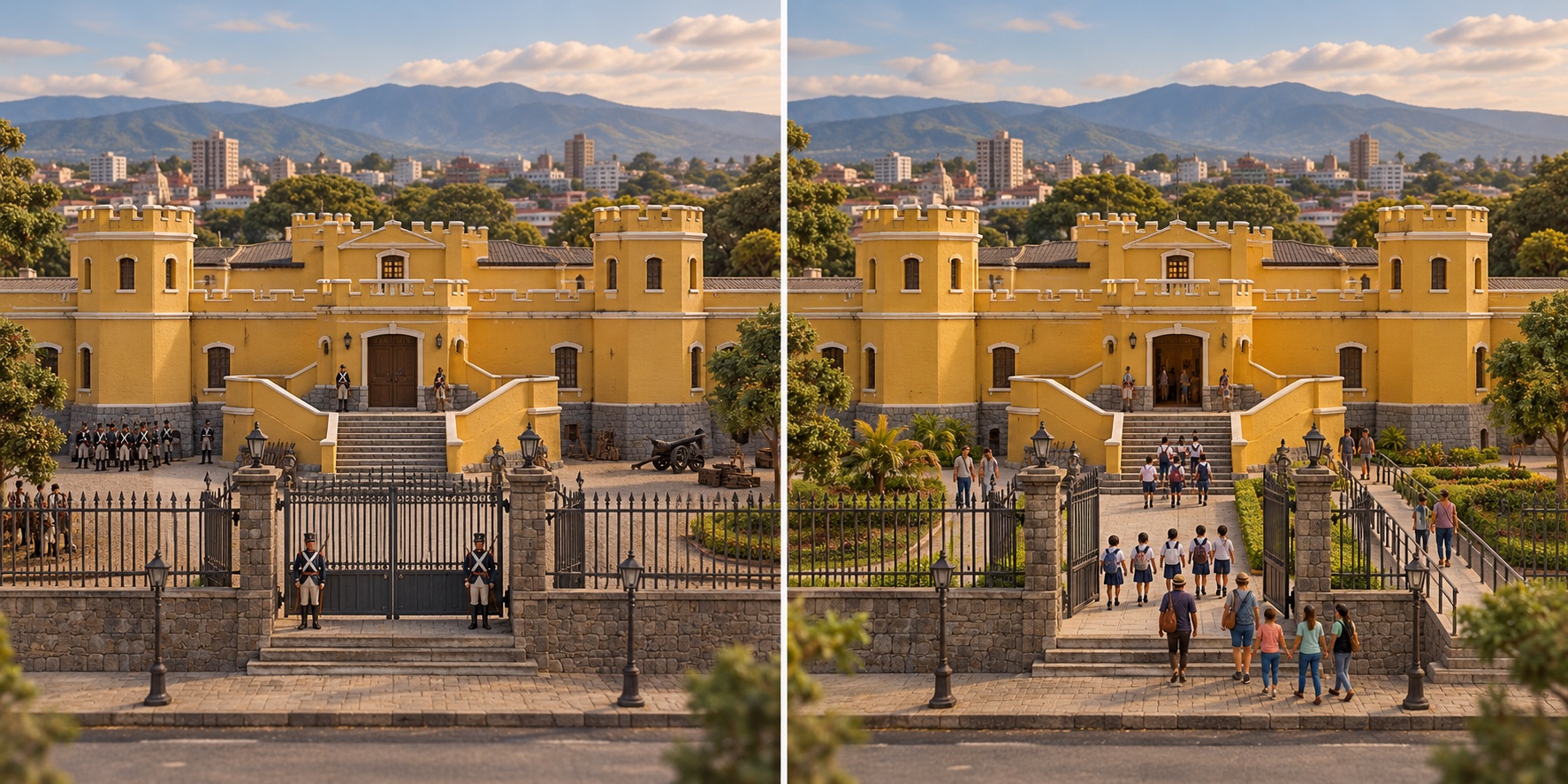
How the change works
- 01 / Public decision
Decision on public use
- 02 / Physical change
Converted barracks
- 03 / Possible outcome
Space open to the community
Institutions can choose new uses of buildings and resources: a concrete transformation makes collective priorities visible.
Research and local documents ↓What the evidence tells us
The history of the Bellavista Barracks documents the transition from a barracks to the National Museum of Costa Rica, in the context of the abolition of the army and the Constitution of 1949.
Putting the choices into practice
Use
The challengeBarracks
The responsePublic Museum
Access
The challengeMilitary function
The responseCulture and visit
Evidence
The challengePresumed environmental benefits
The responseDocumented transformation
The diagram compares choices and conditions for putting them into practice. Measured outcomes and their limits are discussed in the evidence.
Research and local documents ↓Conditions and limits
The change is institutional and cultural. It does not prove that abolishing the army caused the recovery of forests or avoided emissions.
Other possible benefits
Access to heritage and learning opportunities.
Research and local documents
- Local project or policy documentNational Museum of Costa Rica · Armed Forces in Costa Rica ↗
History of the Bellavista Barracks and the context of the abolition of the army.
- Local document and reported findingUniversity of Costa Rica · Document dated December 10, 1948 ↗
Archival document on the dissolution of the armed forces and on the destination of the barracks.