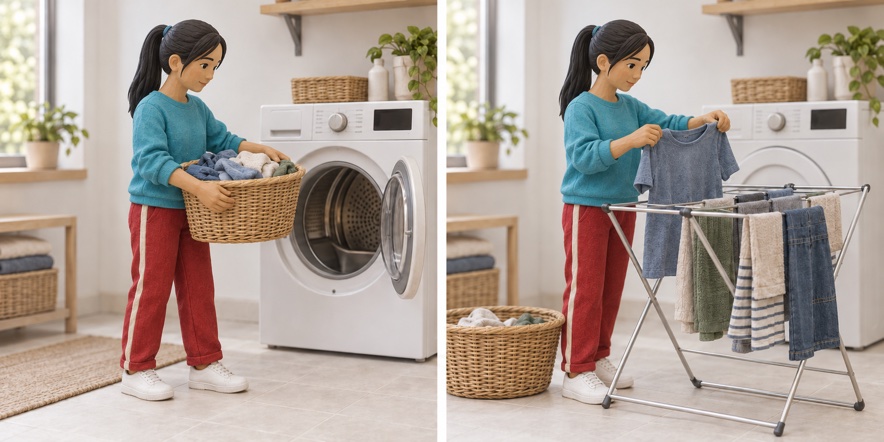
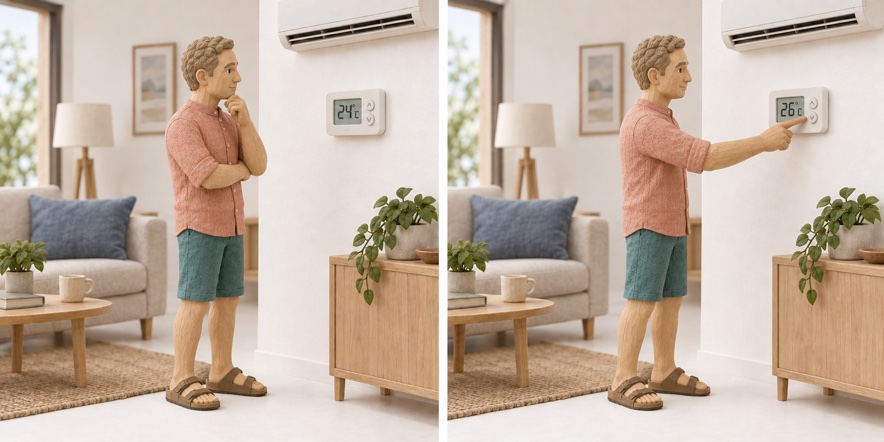
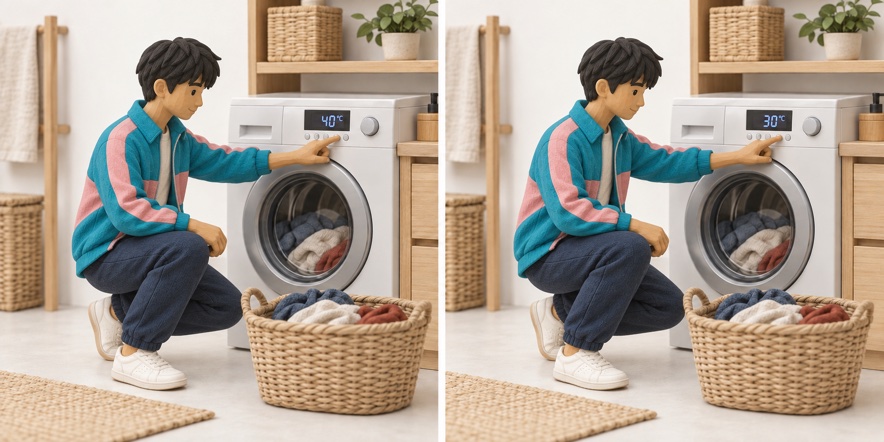
Cover the bath between closely spaced baths
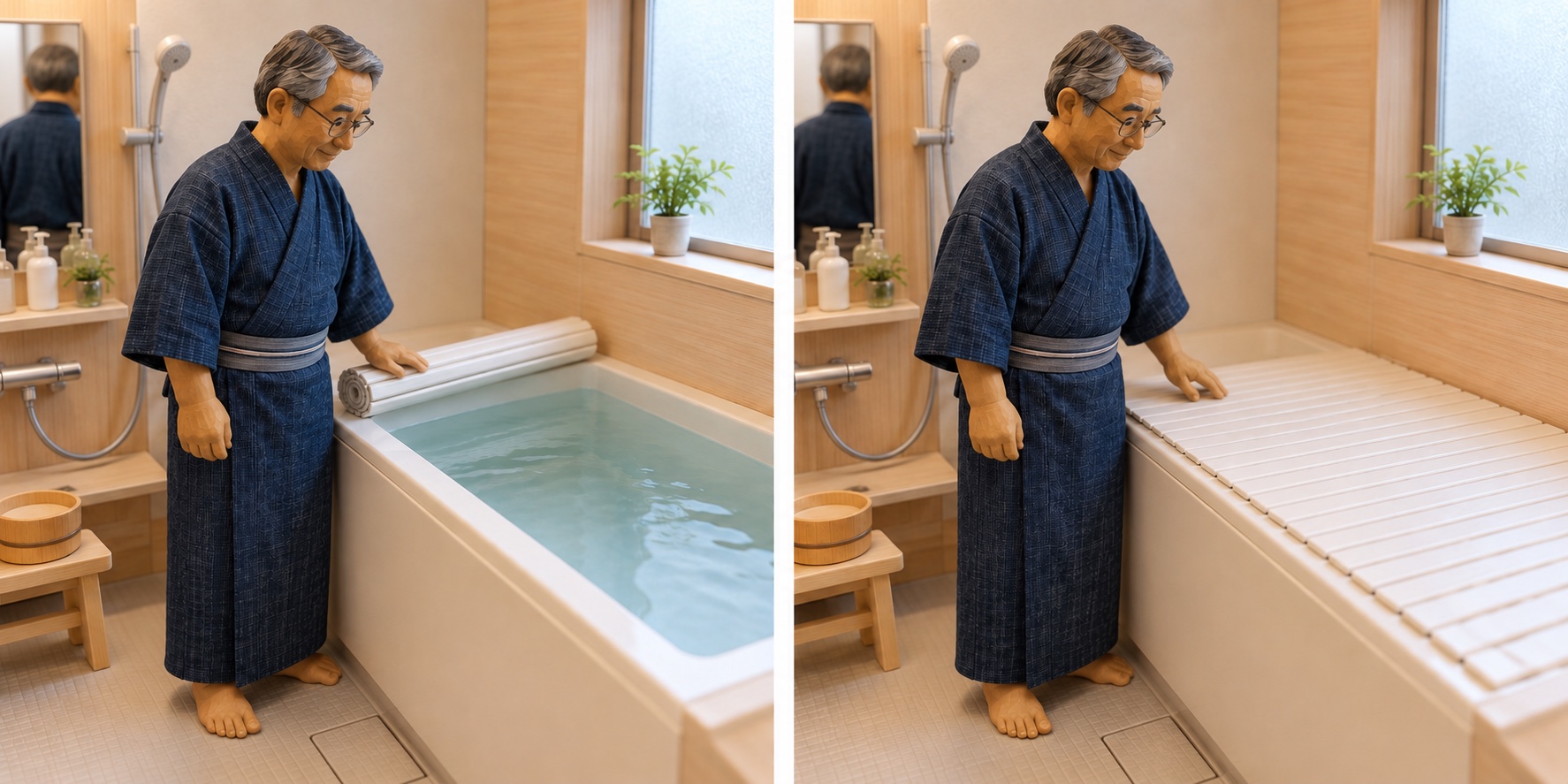
Why this can help
Where a household already takes closely spaced baths in the same prepared water, replacing the existing lid during short gaps limits cooling. This can reduce the energy needed to maintain or restore the water temperature. Japanese experiments support the heat-retention mechanism; official guidance recommends the routine.
One possible next step
If your household already bathes in close succession, check the existing lid and heater instructions. Replace the lid during the short gap while preserving daily water changes, cleaning and protection from unsupervised child access.
What changes the outcome
Use only an appropriate existing lid and follow the heater instructions. Keep normal hygiene: wash before entering shared bathwater, replace water daily, and clean the tub and reheating circuit. Keep required sanitary settings. A bath lid is not child protection; prevent unsupervised access and empty the tub if access cannot be secured. Do not retain old water or add baths to obtain this benefit. Electricity savings depend on the system and interval.
Your illustrative scenario
Over one year · with the assumptions below
You
20 kilowatt-hours of electricity less
You + 10 friends
220 kilowatt-hours of electricity less
1,000 participants
20,000 kilowatt-hours of electricity less
These are scenarios, not measured personal or collective savings. One separate household per participant. People sharing a home count it once, not once each.
Your inputs
- Bath-system electricity per comparable day before
- 1 kWh
- Bath-system electricity per comparable day after
- 0.8 kWh
- Comparable bathing days per year
- 100
Calculation of the difference: (1 − 0.8) kWh × 100 = 20 kilowatt-hours of electricity
Calculation boundaries
Operating electricity for the same electric bathing system over complete comparable cycles, including heating, pumps and standby. Match water volume, bathing temperature, users, initial tank state and weather; include delayed tank reheating. Keep hygiene and required heater settings unchanged. Compare the joint routine of short gaps and covering; readings alone do not isolate the lid effect. Do not enter gas or thermal kWh as electricity. Count the shared household once. Water use, equipment manufacture and carbon are excluded.
The initial 1 kWh before, 0.8 kWh after and 100 days are hypothetical comparison inputs. They give 20 kWh less electricity in the example, not a measured or typical bath-cover saving. Replace them only with a locally assessed comparison or suitable complete-cycle measurements. A retained-heat measurement cannot be treated as electrical energy saved without the heater response and efficiency.
Sources and calculation references
- Study on effect of high insulation bathtub on heat-retention of hot water in housingYuki Mori, Takashi Inoue, Masayuki Mae, Makoto Satoh and Yuhi Murakami · 2014
- 省エネ機器の上手な使い方・選び方 — エコキュートJapanese energy-efficient product information portal, Agency for Natural Resources and Energy · 2025
- 家庭にひそむレジオネラ — Legionella in the homeCity of Yokohama, Health and Medical Care Bureau · 2025
- Prevent Child In-Home Drowning DeathsU.S. Consumer Product Safety Commission
Read the method: universalizable.com/en/method/ · One sheet · print double-sided, long-edge binding