
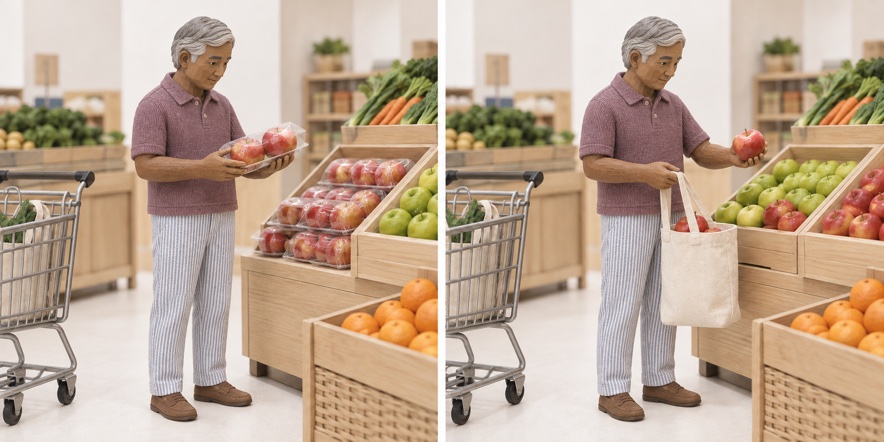

Eating it soon? Choose the nearer date
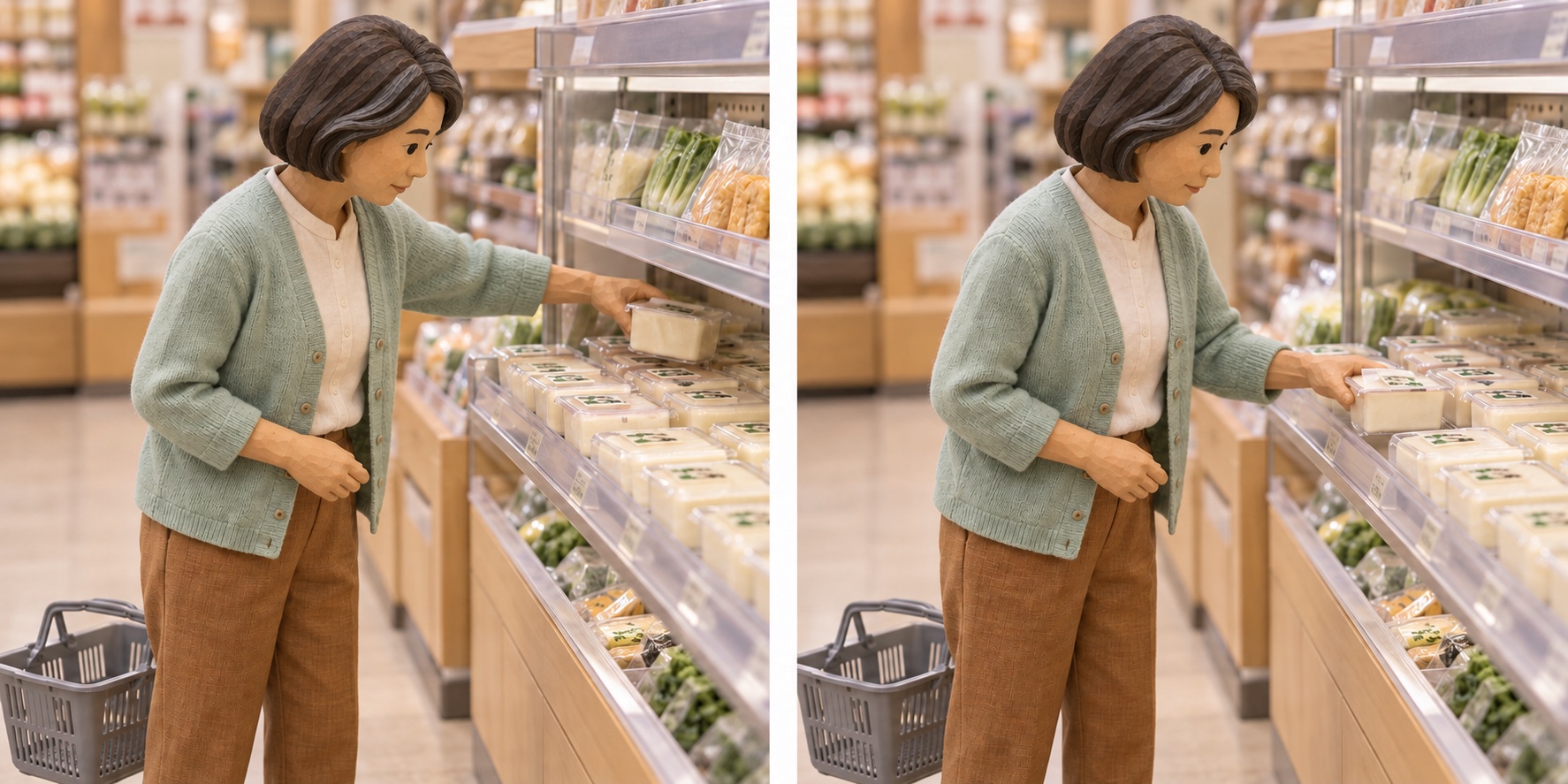
Why this can help
If you will eat it soon, choosing food with a nearer suitable date can help reduce shop waste. Kyoto recorded less retail waste during a temaedori campaign without increased waste among participating households.
One possible next step
For food you already plan to eat soon, check the date and storage instructions on a nearer-date pack. Choose it only if it suits that plan; buy no extra food for the sake of a discount.
What changes the outcome
Buy only what you need and can use safely; follow storage instructions and use-by dates. Choose a longer date when your plan needs it. The campaign was not randomized and combined several messages. A product chosen is not automatically waste prevented: another shopper might have bought it. No personal saving is known without a credible retail comparison.
Your illustrative scenario
Over one year · with the assumptions below
You
2.4 kg of edible food wasted less
You + 10 friends
26.4 kg of edible food wasted less
1,000 participants
2,400 kg of edible food wasted less
These are scenarios, not measured personal or collective savings. One separate household per participant. People sharing a home count it once, not once each.
Your inputs
- Retail waste otherwise expected per occasion
- 250 g
- Additional food waste caused per occasion
- 50 g
- Eligible purchase occasions per month
- 1
- Months in the year
- 12
Calculation of the difference: (250 − 50) g / 1000 × 1 × 12 = 2.4 kg of edible food wasted
Calculation boundaries
Only food-waste streams changed by these household purchases. The first input requires a credible counterfactual: food the shop would otherwise discard and whose disposal this purchase prevents. Do not enter the total weight bought or assume that a front pack would be wasted. Subtract all additional food waste caused, including at home. Follow the affected food until eaten or discarded. Count each portion once across shop, household and group. This is edible mass, excluding packaging, cooking water, storage energy and carbon.
Illustrative assumptions: 250 g of otherwise discarded shop food and 50 g of additional waste per eligible purchase, once monthly for 12 months. The arithmetic gives 2.4 kg less waste within this scenario. These are invented comparison inputs, not a typical saving, Kyoto data or a verified personal result. Without a credible retail baseline, use this only to explore assumptions; a personal saving cannot be estimated.
Sources and calculation references
- 「てまえどり」の食品ロス削減効果について — Evaluation of food-waste reduction through temaedoriCity of Kyoto, Environmental Policy Bureau · 2022
- 食べ物を大切にする購買行動「てまえどり」 — Choosing food to eat soonCity of Kobe · 2026
- Understanding food labelling: Best before and use-by datesUK Government
Read the method: universalizable.com/en/method/ · One sheet · print double-sided, long-edge binding