Use the electric pressure cooker you already own
Why this can help
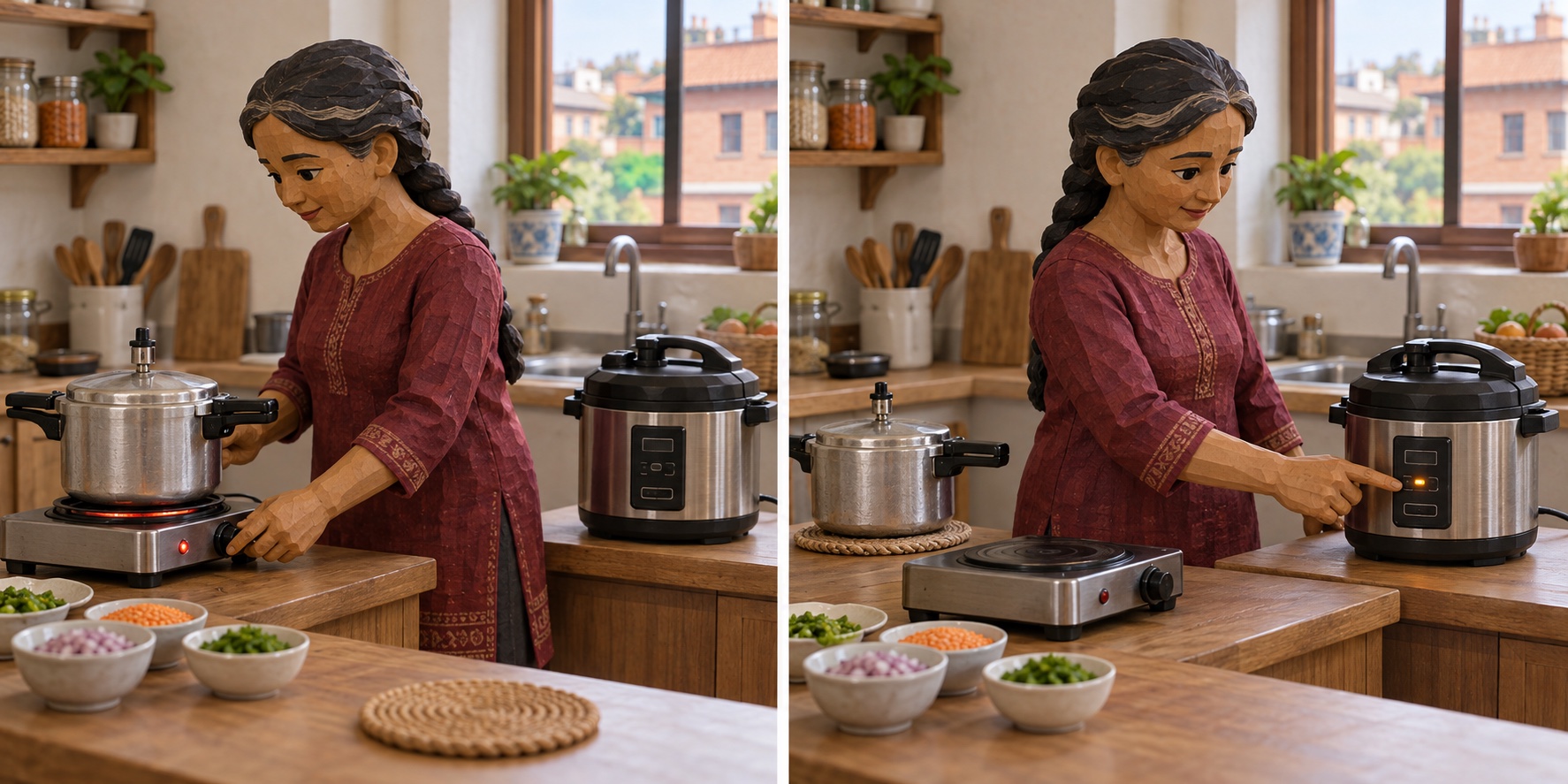
For a suitable recipe, an already-owned electric pressure cooker can use less electricity than another electric cooking setup. Controlled Nepali tests measured this for their menu and devices. The comparison includes appliance control and heat retention, not pressure alone.
One possible next step
Choose a suitable recipe for the electric pressure cooker you already own. Read its fill, valve and opening instructions, and compare the whole cooking cycle for the same fully cooked meal.
What changes the outcome
Use a functioning appliance, reliable suitable electricity and its manual for the recipe, liquid, fill limit and pressure release. Never force the lid or bypass safety controls. Include keeping warm and any finishing elsewhere. Electric cooking is not always environmentally preferable to other fuels; supply and local conditions matter. No purchase or fuel-switching result is assumed.
Your illustrative scenario
Over one year · with the assumptions below
You
30 kilowatt-hours of electricity less
You + 10 friends
330 kilowatt-hours of electricity less
1,000 participants
30,000 kilowatt-hours of electricity less
These are scenarios, not measured personal or collective savings. One separate household per participant. People sharing a home count it once, not once each.
Your inputs
- Electricity per matching meal with the usual setup
- 1 kWh
- Electricity per matching meal with the owned cooker
- 0.7 kWh
- Comparable meals per year
- 100
Calculation of the difference: (1 − 0.7) kWh × 100 = 30 kilowatt-hours of electricity
Calculation boundaries
Compare electricity only: the same recipe, quantities, soaking preparation and fully cooked result, with complete operating cycles on the same electricity supply. Include preheating, keeping warm and additional electric finishing. If fuel is also used, this model is incomplete; do not enter fuel heat as electricity. Manufacture, local generation impacts and carbon are excluded. Do not add an overlapping soaking saving to the same meal.
1 kWh before, 0.7 kWh after and 100 meals are editable examples, not the Nepali test values or a typical saving. Use comparable normal cooking records or a suitable local assessment; include the whole cooking task.
Sources and calculation references
- Understanding the Suitability of Electric Pressure Cookers in Nepali HouseholdsPeople, Energy and Environment Development Association (PEEDA), University of Bristol and Kathmandu Alternative Power and Energy Group · 2021
- Frequently Asked Questions — Pressure cooking and safe openingInstant Pot
- Instant Pot Plus 5.7L Multi-Cooker — Product manualInstant Pot UK
Read the method: universalizable.com/en/method/ · One sheet · print double-sided, long-edge binding