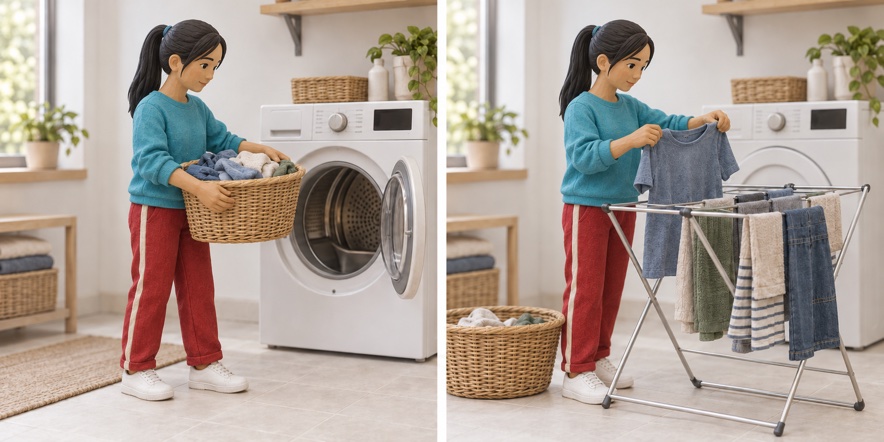
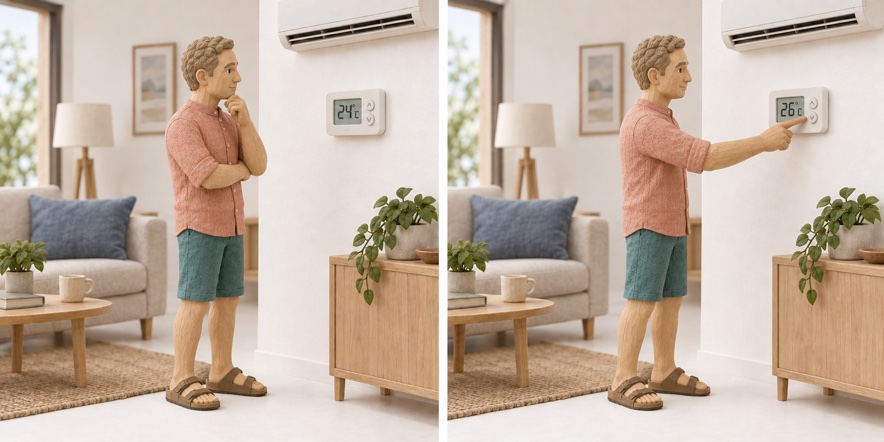
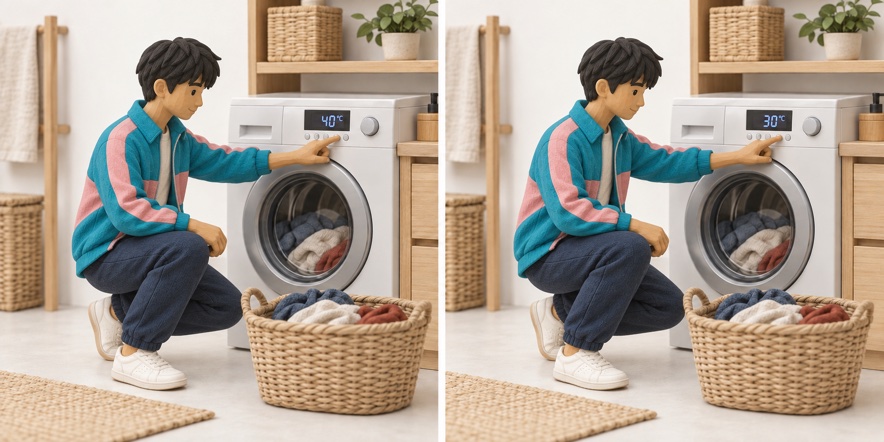
Boil only the water you need
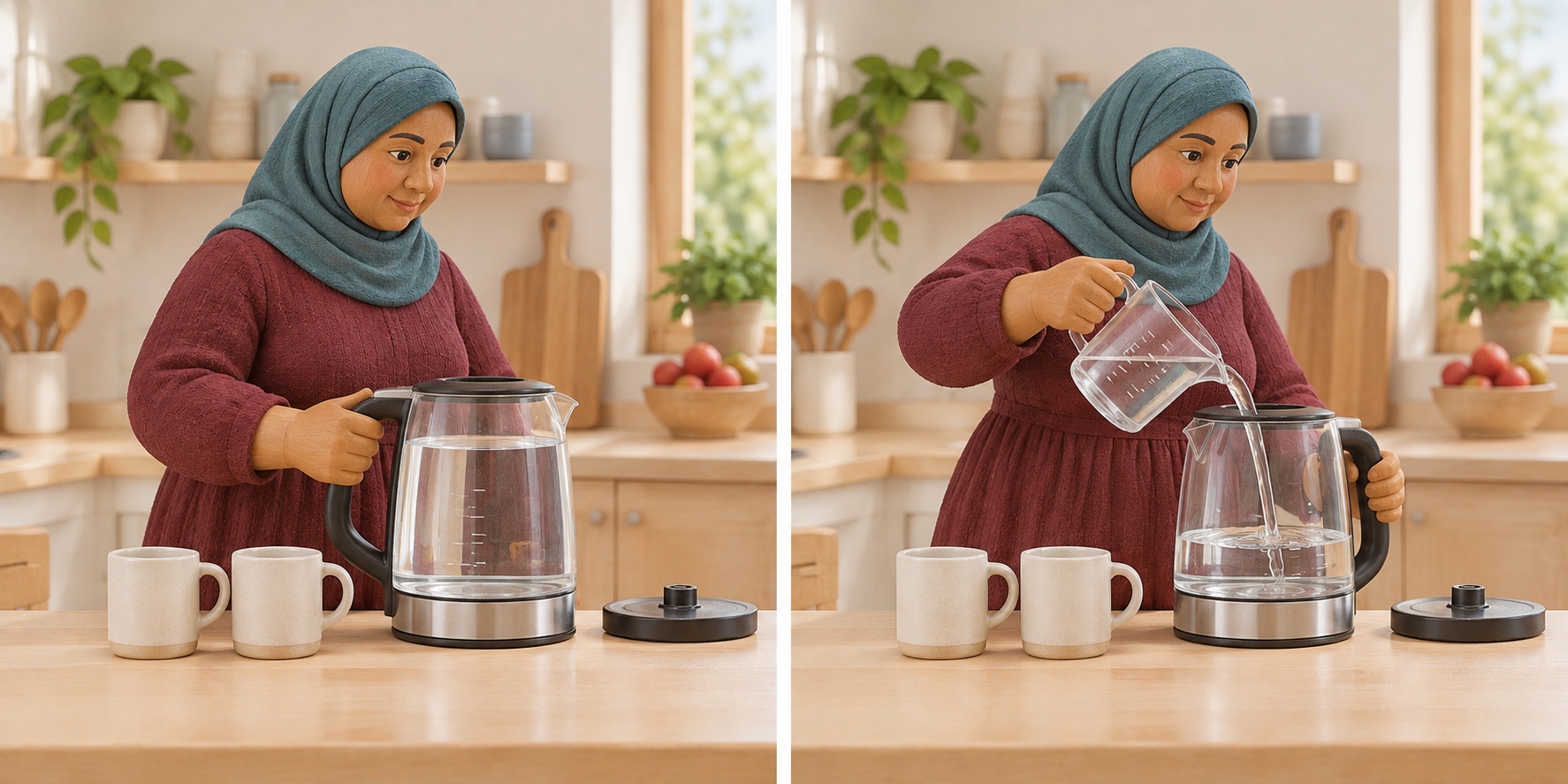
Why this can help
Heating less surplus water can reduce the electricity used for a boil. Measure what your drinks need while respecting the kettle’s minimum fill.
One possible next step
Before the next boil, use your mugs to measure the water needed and check the kettle’s minimum fill.
What changes the outcome
The measured example concerns one kettle and one starting temperature, not an average household. Water kept for later is not automatically wasted water; this calculation covers electricity only.
Your illustrative scenario
Over one year · with the assumptions below
You
20.55 kilowatt-hours of electricity less
You + 10 friends
226.04 kilowatt-hours of electricity less
1,000 participants
20,549.5 kilowatt-hours of electricity less
These are scenarios, not measured personal or collective savings. One separate household per participant. People sharing a home count it once, not once each.
Your inputs
- Electricity per boil before
- 122 Wh
- Electricity per boil after
- 65.7 Wh
- Changed boils per day
- 1
- Days per year
- 365
Calculation of the difference: (122 − 65.7) Wh × 1 × 365 / 1000 = 20.5495 kilowatt-hours of electricity
Calculation boundaries
Active electricity for repeated kettle boils only. Keep the same useful amount of hot water and respect appliance fill limits. No water-saving, standby or life-cycle claim.
Initial electricity values are measurements of one plastic kettle heating 1 L versus 0.5 L from 10°C to 100°C. One boil per day and 365 days are editable assumptions; replace the energy values for a different device or task.
Sources and calculation references
- Life cycle environmental evaluation of kettles: Recommendations for the development of eco-design regulations in the European UnionAlejandro Gallego-Schmid; Harish Kumar Jeswani; Joan Manuel F. Mendoza; Adisa Azapagic · 2018
- Energy efficiency tipsNorthern Ireland government, nidirect
Read the method: universalizable.com/en/method/ · One sheet · print double-sided, long-edge binding