
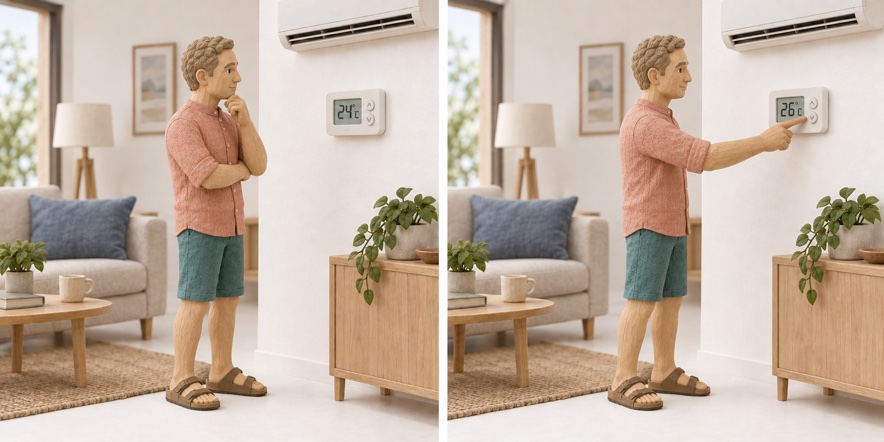

Skip a recreational wood fire on poor-air days
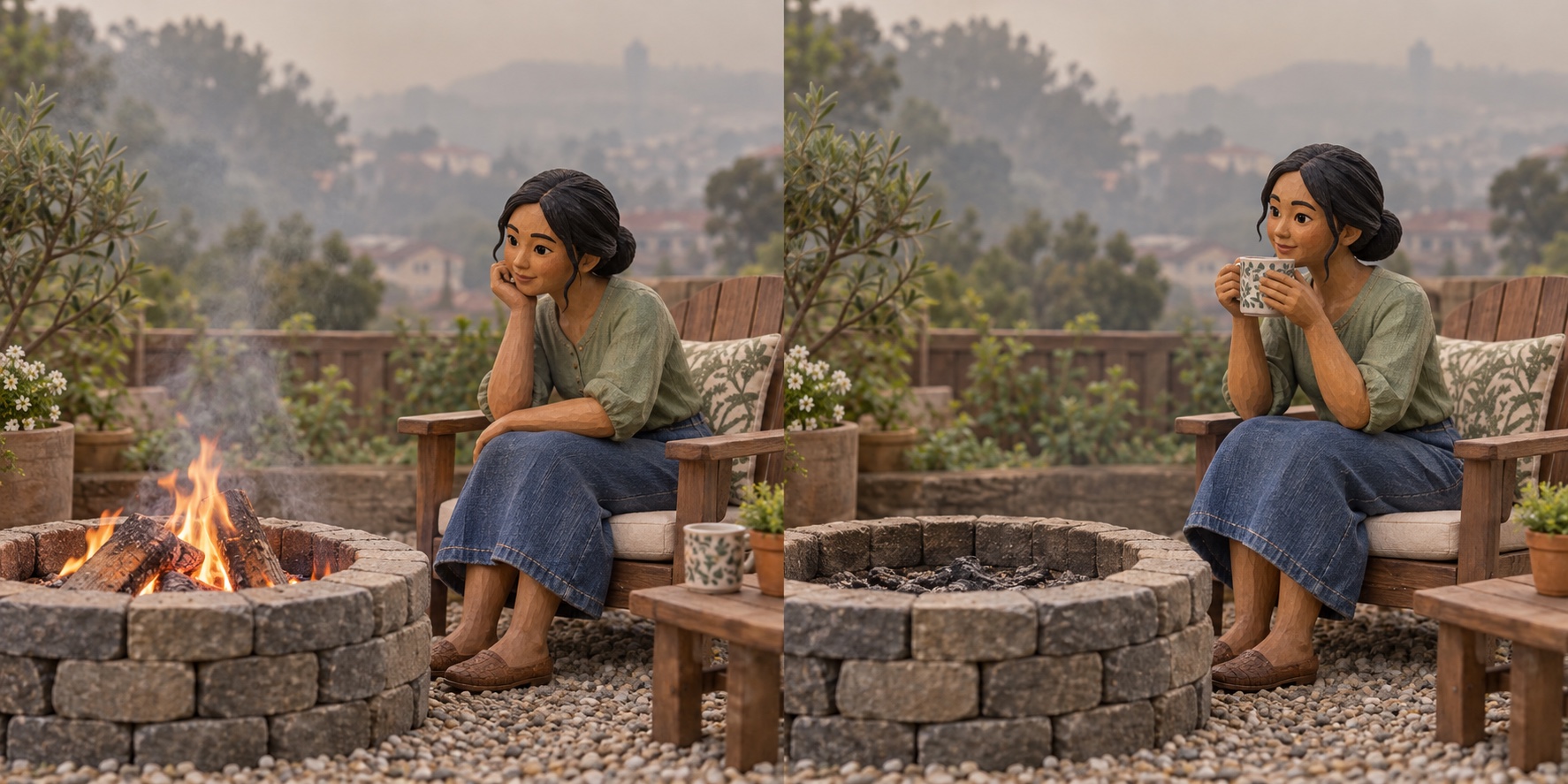
Why this can help
Avoiding an unnecessary wood fire avoids its smoke emissions during a period when air pollution is already a concern. Local air-quality advice can guide this decision.
One possible next step
Check the local air-quality forecast before lighting a recreational fire and choose another activity on poor-air days.
What changes the outcome
This concerns optional burning with a practical alternative, not removing essential heat. Follow current local restrictions and alerts. Dry wood still produces smoke, and no universal particulate saving per evening is assumed.
The action
One possibility
Lighting an optional wood fire during poor air quality
Another possibility
Leaving the fireplace unlit that evening
Avoiding an unnecessary wood fire avoids its smoke emissions during a period when air pollution is already a concern. Local air-quality advice can guide this decision.
Check the local air-quality forecast before lighting a recreational fire and choose another activity on poor-air days.
Sources and calculation references
- EPA — Best wood-burning practicesUnited States Environmental Protection Agency
Read the method: universalizable.com/en/method/ · One sheet · print double-sided, long-edge binding