
Remove unused loads from the car
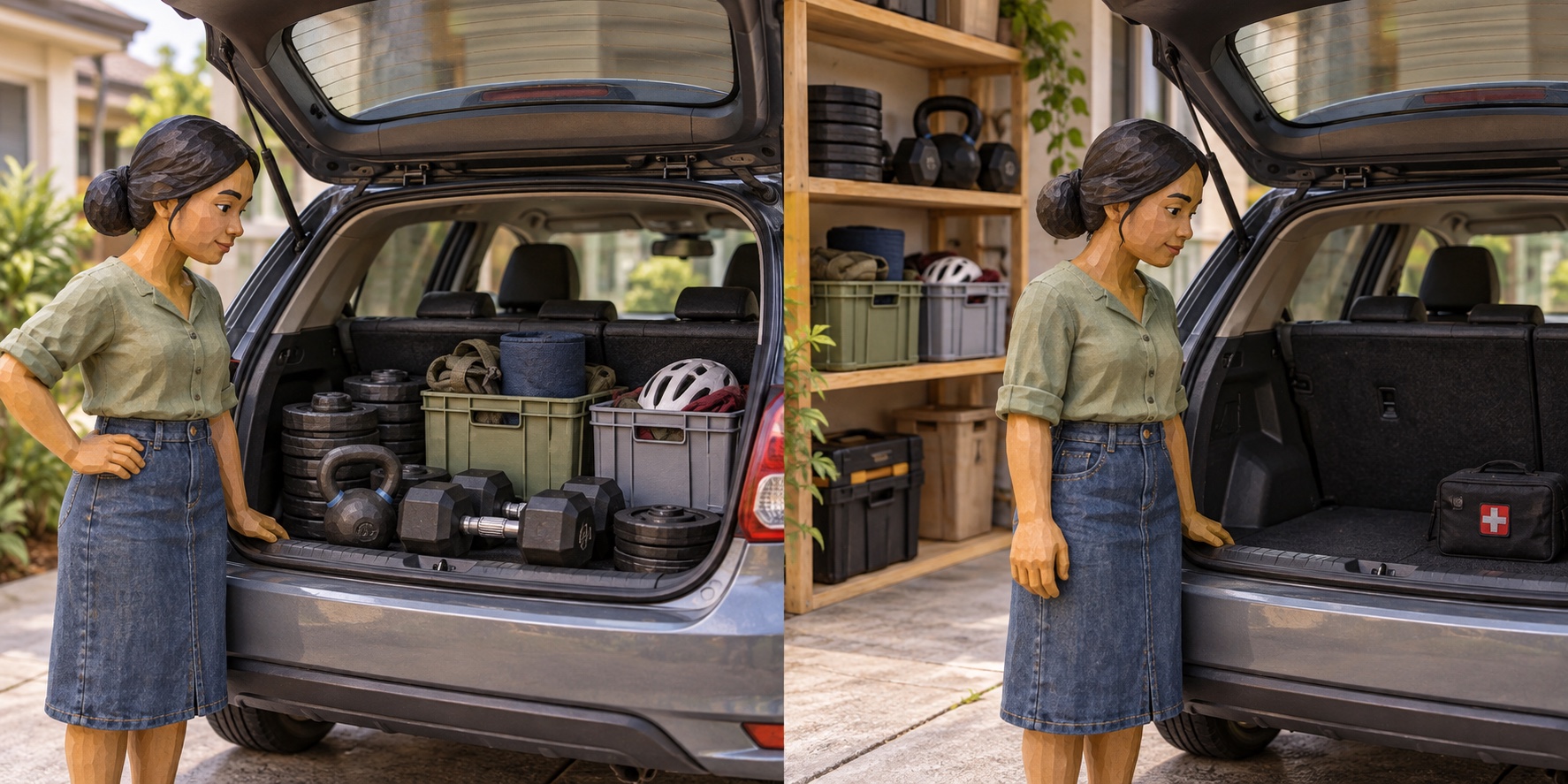
Why this can help
Moving extra mass requires energy. Removing unnecessary loads can reduce fuel use, particularly in smaller vehicles and journeys with repeated acceleration.
One possible next step
Check the boot for heavy items left there after their last use.
What changes the outcome
Keep emergency equipment and anything needed for the journey. The effect is usually modest and depends on load, vehicle and route; it differs from the aerodynamic effect of a roof box.
Your illustrative scenario
Over one year · with the assumptions below
You
25 litres of fuel used less
You + 10 friends
275 litres of fuel used less
1,000 participants
25,000 litres of fuel used less
These are scenarios, not measured personal or collective savings. One separate vehicle per participant. A shared car is counted once.
Your inputs
- Fuel per 100 km Before
- 7 L fuel
- Fuel per 100 km After
- 6.5 L fuel
- Comparable distance per year
- 5,000 km
Calculation of the difference: (7 − 6.5) × 5000 × 0.01 = 25 litres of fuel used
Calculation boundaries
Use the same vehicle, fuel, distance and comparable traffic, weather and load. A difference between unmatched trips cannot be attributed to this action. Do not add several driving improvements for the same fuel reduction. Keep emergency equipment and anything needed for the journey. The effect is usually modest and depends on load, vehicle and route; it differs from the aerodynamic effect of a roof box.
The initial values are editable arithmetic examples, not measurements or typical savings from the cited studies. Replace them with comparable readings for your situation. The sources support the mechanism and its conditions; they do not predict these numbers.
Sources and calculation references
- DOE/EPA — Driving more efficientlyUnited States Department of Energy/United States Environmental Protection Agency
Read the method: universalizable.com/en/method/ · One sheet · print double-sided, long-edge binding