Allow suitable lawns a summer dormancy
Why this can help
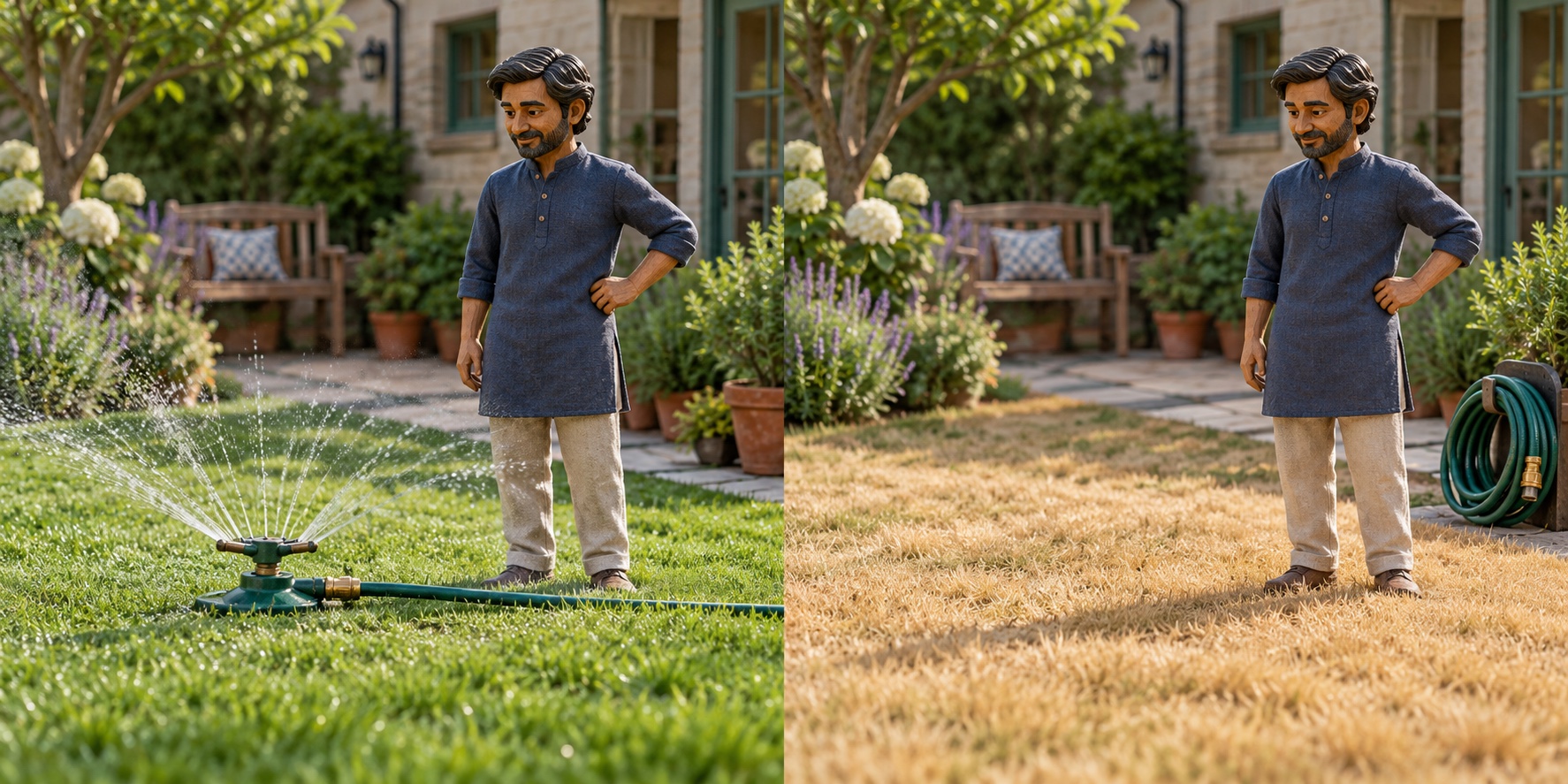
Some established grasses can enter summer dormancy instead of staying green under continuous irrigation. Appropriate seasonal management can reduce water demand.
One possible next step
Check local advice for your grass species before changing summer watering and appearance expectations.
What changes the outcome
This depends on grass species, soil, drought duration and climate. Survival watering may still be needed; do not apply the approach blindly to newly established or incompatible lawns.
Your illustrative scenario
Over one year · with the assumptions below
You
240 litres of water used less
You + 10 friends
2,640 litres of water used less
1,000 participants
240,000 litres of water used less
These are scenarios, not measured personal or collective savings. One separate household per participant. People sharing a home count it once, not once each.
Your inputs
- Irrigation per comparable week Before
- 100 L
- Irrigation per comparable week After
- 80 L
- Suitable weeks per year
- 12
Calculation of the difference: (100 − 80) × 12 = 240 litres of water used
Calculation boundaries
Only fresh water used for the same service is counted. Include rinsing and repeated attempts. Heating, water treatment and carbon emissions are outside this account. Compare the same area and rainfall. Include necessary survival watering; readings from different weather do not isolate this action. This depends on grass species, soil, drought duration and climate. Survival watering may still be needed; do not apply the approach blindly to newly established or incompatible lawns.
The initial values are editable arithmetic examples, not measurements or typical savings from the cited studies. Replace them with comparable readings for your situation. The sources support the mechanism and its conditions; they do not predict these numbers.
Sources and calculation references
- University of Illinois Extension — Lawns during droughtUniversity of Illinois Extension
Read the method: universalizable.com/en/method/ · One sheet · print double-sided, long-edge binding