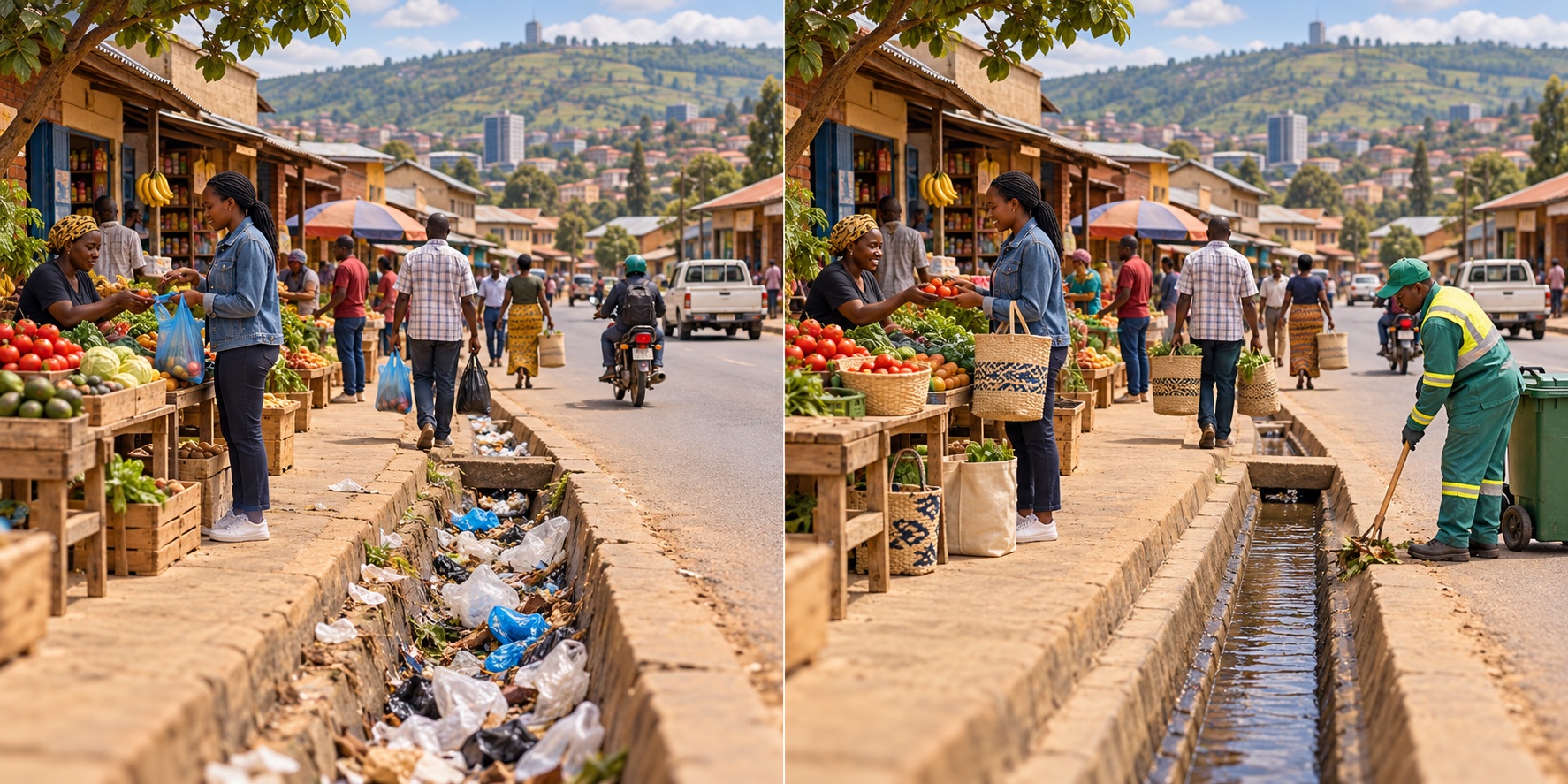
Illustrated comparison inspired by the place and case. Conceptual scenes, not a photographic before and after.
How the change works
- 01 / Public decision
Restrictions with alternatives and collection
- 02 / Physical change
Fewer lost bags
- 03 / Possible outcome
Less waste in channels and environment
Disposable product rules work together with accessible alternatives, collection and actual enforcement.
Research and local documents ↓What the evidence tells us
UNEP documents the 2008 Rwandan bag ban and the country's largest work on materials management and recycling.
Conditions and limits
The ban alone does not prove how much emissions are decreasing. There are substitutes, real reuses, checks and burdens for sellers and families.
Other possible benefits
Cleaner public spaces and less obstructed drains.
Research and local documents
- Evidence for this findingUNEP · Rwanda: development and environmental protection ↗
UNEP documents the 2008 Rwandan bag ban and the country's largest work on materials management and recycling.
- Local project or policy documentREMA · Law no. 17/2019 and authorizations ↗
Rwandan Environmental Authority: regulatory framework and derogations; it does not measure the environmental effect on its own.

