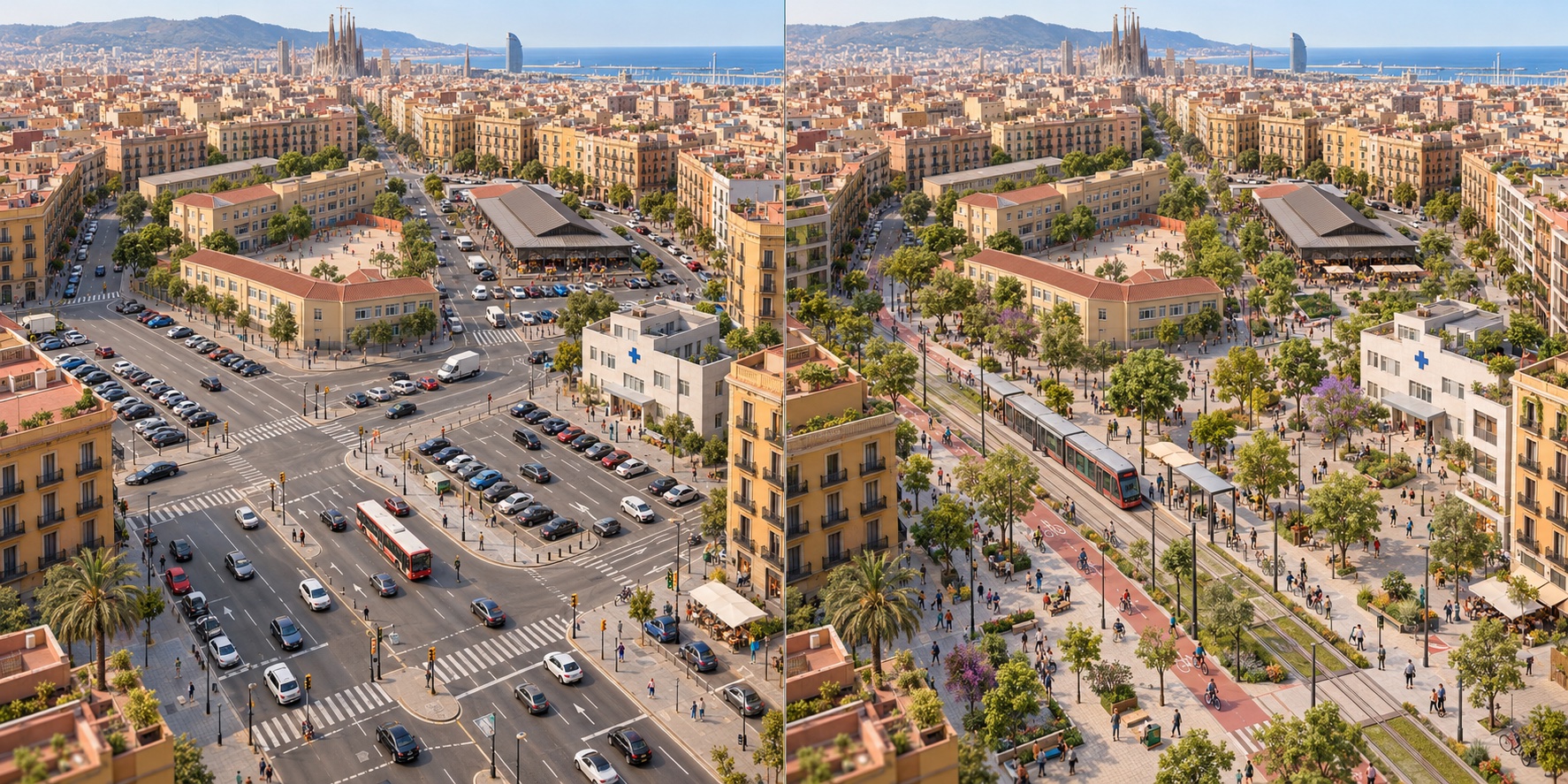
Illustrated comparison inspired by the place and case. Conceptual scenes, not a photographic before and after.
How the change works
- 01 / Public decision
Nearby services and accessible roads
- 02 / Physical change
Shorter distances and active mobility
- 03 / Possible outcome
Lower demand for motorized transport
Bringing homes, services and activities closer together can reduce distances and demand for motorized transport.
Research and local documents ↓What the evidence tells us
The IPCC links the compact urban form that can be walked on foot to lower emissions and greater possibilities for active mobility.
Conditions and limits
It is a relationship between urban systems, not a guaranteed percentage for each neighborhood. Affordability and the risk of expulsion of residents must be addressed.
Other possible benefits
More autonomy when moving and space to meet.
Research and local documents
- Evidence for this findingIPCC AR6 WGIII · figure 8.16, 2022 ↗
The IPCC links the compact urban form that can be walked on foot to lower emissions and greater possibilities for active mobility.
- Local project or policy documentBarcelona Public Health Agency · Salut als Carrers ↗
Local assessments of the Superilles, to be distinguished from general results on urban form.
- Scientific basis of the mechanismIPCC AR6 WGIII · Chapter 8: Urban systems, 2022 ↗
Scientific basis on the relationships between urban form, infrastructure and energy demand; it does not measure the effect of local reform on its own.


