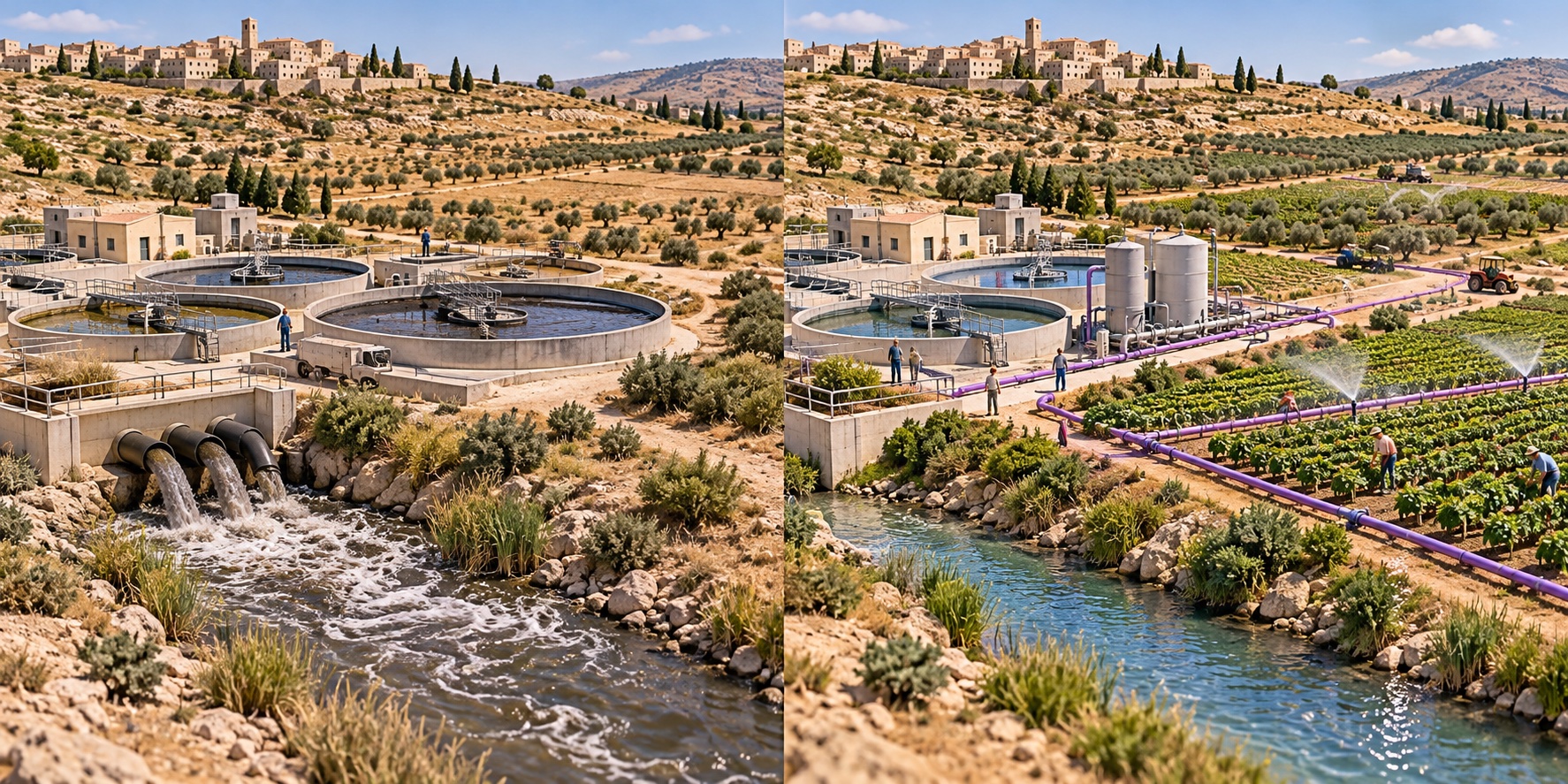
How the change works
- 01 / Public decision
Purification and standards
- 02 / Physical change
Distribution for compatible uses
- 03 / Possible outcome
Lower demand for other resources
Purifying and reusing water can reduce the demand for conventional resources, as long as quality and end use are compatible.
Research and local documents ↓What the evidence tells us
The OECD assessment of Israel documents the role of investments in the purification and reuse of wastewater for irrigation. A dedicated network connects treatment, controls and users.
Putting the choices into practice
Quality
The challengeTreatment not related to use
The responseStandards matched to water use
Network
The challengeWastewater without recovery
The responseDedicated distribution
Soil
The challengeSalt accumulation ignored
The responseMonitoring over time
The diagram compares choices and conditions for putting them into practice. Measured outcomes and their limits are discussed in the evidence.
Research and local documents ↓Conditions and limits
Reuse does not eliminate salts, contaminants or energy consumption by definition. The treatment level must be suitable for crops, soils and groundwater protection.
Other possible benefits
Greater flexibility of supply in areas with water scarcity.
Research and local documents
- Local document and reported findingOECD Environmental Performance Reviews: Israel 2023 ↗
Institutional documentation of the program, territory or rules mentioned.

