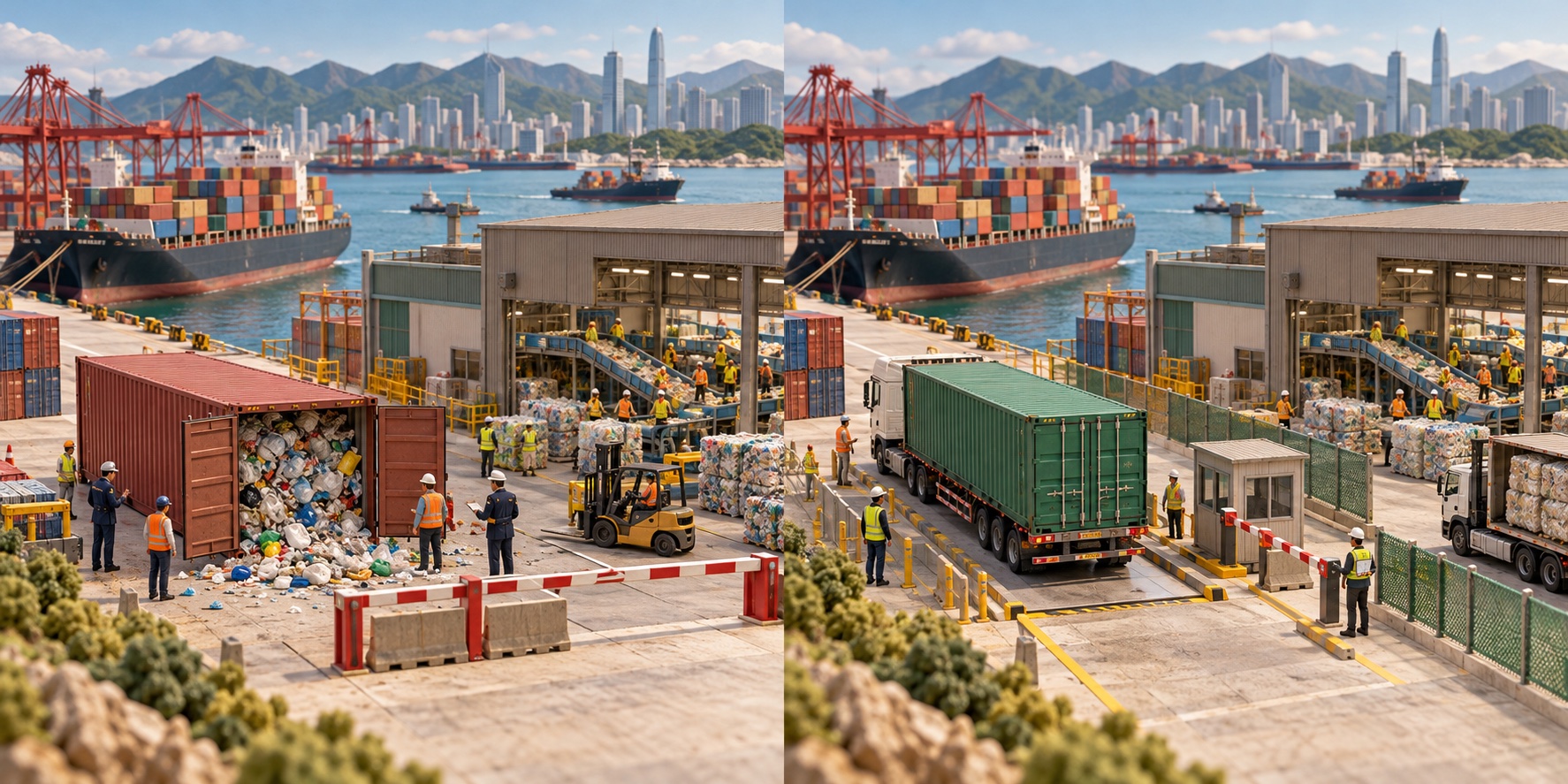
How the change works
- 01 / Public decision
Shipping liability
- 02 / Physical change
Verified destinations
- 03 / Possible outcome
Management along the supply chain
Exporting waste changes where it's managed, it doesn't make it go away. Shipping rules and processing capacity must proceed together.
Research and local documents ↓What the evidence tells us
Brooks and colleagues analyze the shock of the Chinese blockade on plastic imports. Amendments to the Basel Convention tighten the control of many shipments of plastic waste.
Putting the choices into practice
Boundary
The challengeExport mistaken for a solution
The responseLiability up to treatment
Oversight
The challengeShipped weight only
The responseVerified plant and process
Prevention
The challengeLook for new outlets
The responseReduce problematic materials
The diagram compares choices and conditions for putting them into practice. Measured outcomes and their limits are discussed in the evidence.
Research and local documents ↓Conditions and limits
The 111 million tons by 2030 are a projection of the study, not an observed total. Shifting exports doesn't prove better recycling.
Other possible benefits
Lower incentives to transfer damage elsewhere.
Research and local documents
- Local project or policy documentBasel Convention · Plastic Waste Amendments ↗
Institutional documentation of the program, territory or rules mentioned.
- Evidence for this findingBrooks, Wang and Jambeck, 2018 · The Chinese import ban and its impact on global plastic waste trade ↗
Analysis of trade flows and projection to 2030; the projection is not an observed total.

