Catch initial shower water for a useful next task
Why this can help
Where hot water takes time to arrive, the clean initial flow can replace fresh water for a necessary non-drinking task. Mexico City’s SEDEMA and United States Environmental Protection Agency describe this practice. A saving occurs only when the collected water is actually used instead of new water.
One possible next step
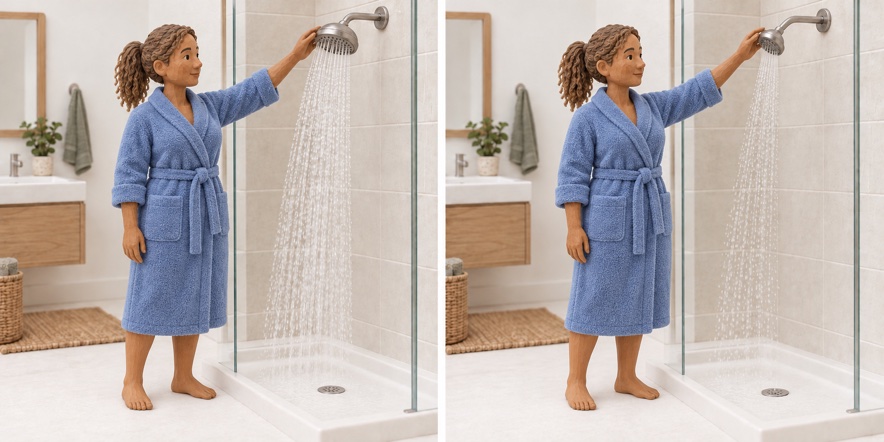
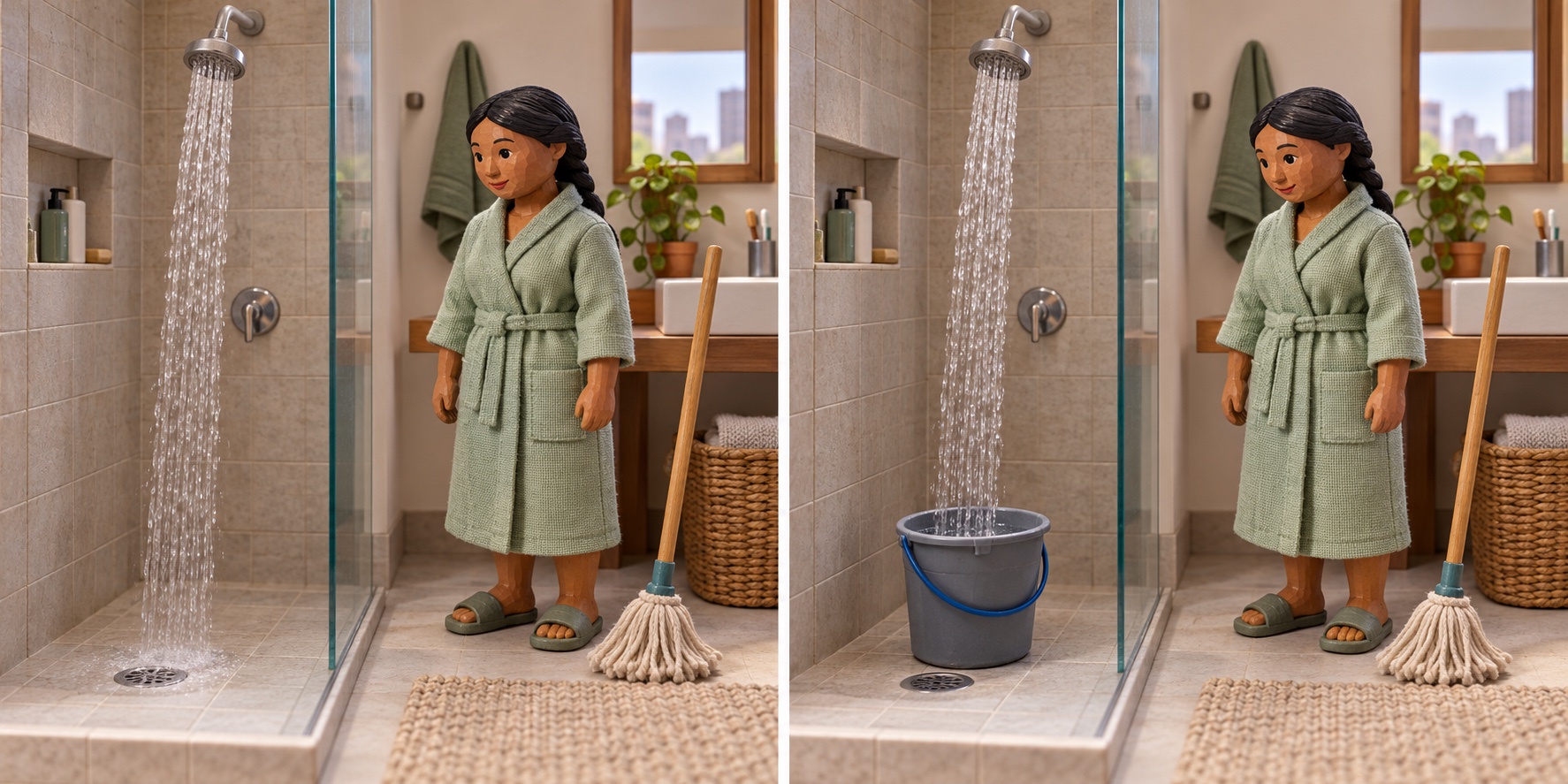
Choose a task that already needs water, then catch only the usual initial flow in a manageable clean container.
What changes the outcome
Collect only before water touches the body or soap, and use it promptly for a suitable task such as floor cleaning. Do not drink it or leave open stored water. Keep the container stable and out of the walking area. Do not run the shower longer to fill it. Not every shower has a warm-up wait.
Your illustrative scenario
Over one year · with the assumptions below
You
300 litres of water used less
You + 10 friends
3,300 litres of water used less
1,000 participants
300,000 litres of water used less
These are scenarios, not measured personal or collective savings. One separate household per participant. People sharing a home count it once, not once each.
Your inputs
- Fresh water the next task would otherwise need
- 5 L
- Initial shower water actually collected
- 3 L
- Additional fresh water for collecting or cleaning
- 0 L
- Paired collection and reuse occasions per year
- 100
Calculation of the difference: [min(3, 5) − 0] L × 100 = 300 litres of water used
Calculation boundaries
Fresh water for a necessary non-drinking task following the usual shower warm-up. The initial shower flow is unchanged in both scenarios. Only collected water that replaces a new draw counts. Use it promptly before contamination; exclude extra running time to fill the container and do not count unused surplus.
The displayed litres and occasions are hypothetical inputs. They do not represent a typical Mexican household or shower. The calculation caps substitution at the smaller of water collected and genuine need, then subtracts extra fresh water.
Sources and calculation references
- Drought & WaterSenseU.S. Environmental Protection Agency, WaterSense
- Cambio climático — En la casa: AguaSecretaría del Medio Ambiente, Ciudad de México
Read the method: universalizable.com/en/method/ · One sheet · print double-sided, long-edge binding