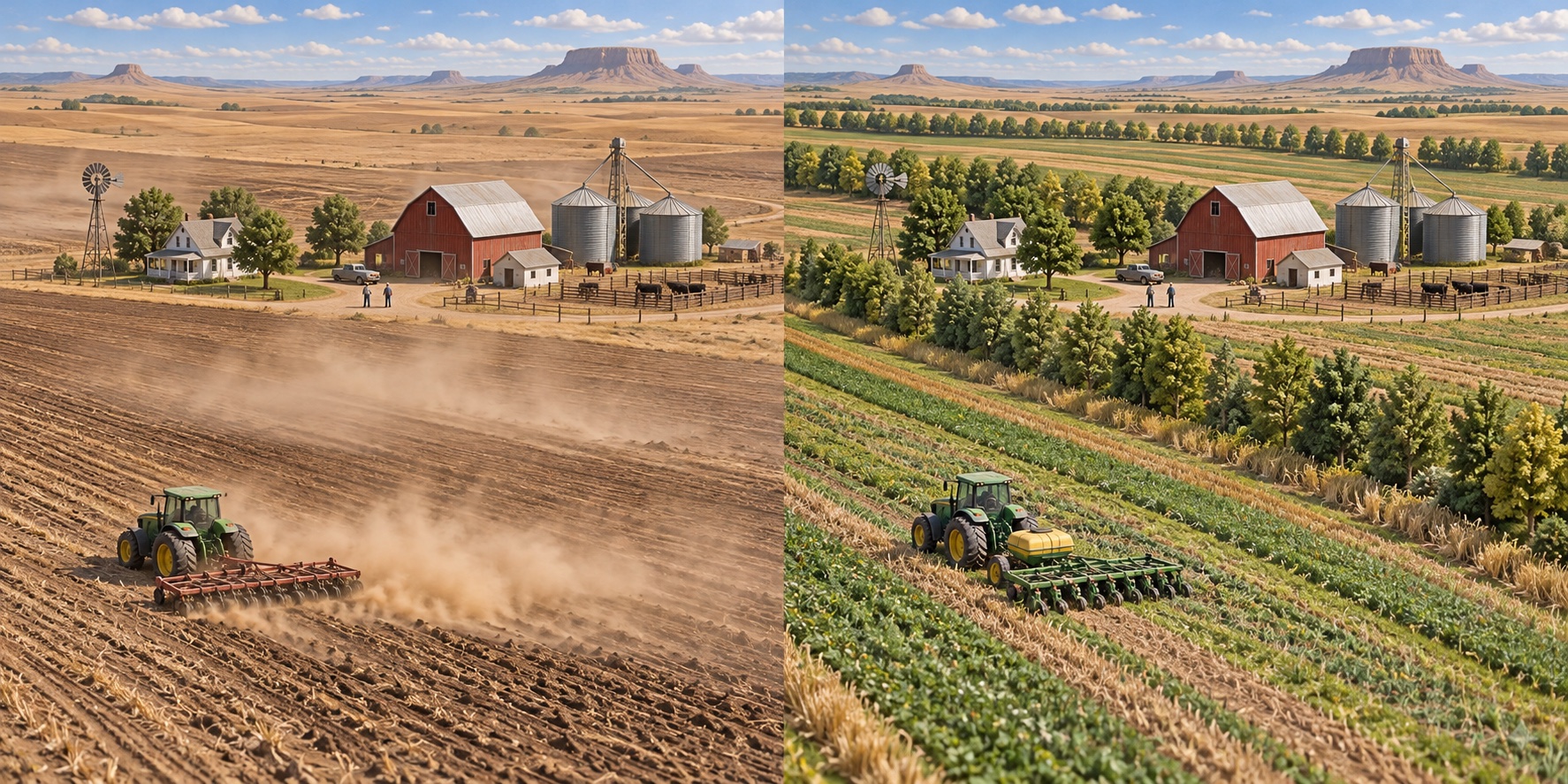
How the change works
- 01 / Public decision
Public Conservation Service
- 02 / Physical change
Practices against wind and runoff
- 03 / Possible outcome
Protected fertile soil
Soil left exposed is more vulnerable to erosion. Public assistance and suitable agricultural practices can help preserve it.
Research and local documents ↓What the evidence tells us
The American response to the Dust Bowl led to the establishment of the Soil Conservation Service in 1935. The history of the NRCS documents the launch of a public service to combat erosion with farmers.
Putting the choices into practice
Surface
The challengeBare ground
The responseVegetation cover
Wind
The challengeUnprotected fields
The responseWindbreak strips
Support
The challengeFarmers left alone
The responseTechnical assistance
The diagram compares choices and conditions for putting them into practice. Measured outcomes and their limits are discussed in the evidence.
Research and local documents ↓Conditions and limits
The end of dust storms did not depend on the law alone: rain, land use and agricultural practices changed together. The scenes show the soil protection mechanism.
Other possible benefits
Greater continuity of agricultural production and less dispersed sediment.
Research and local documents
- Local project or policy documentUSDA NRCS · Brief History of NRCS ↗
Institutional documentation of the program, territory or rules mentioned.