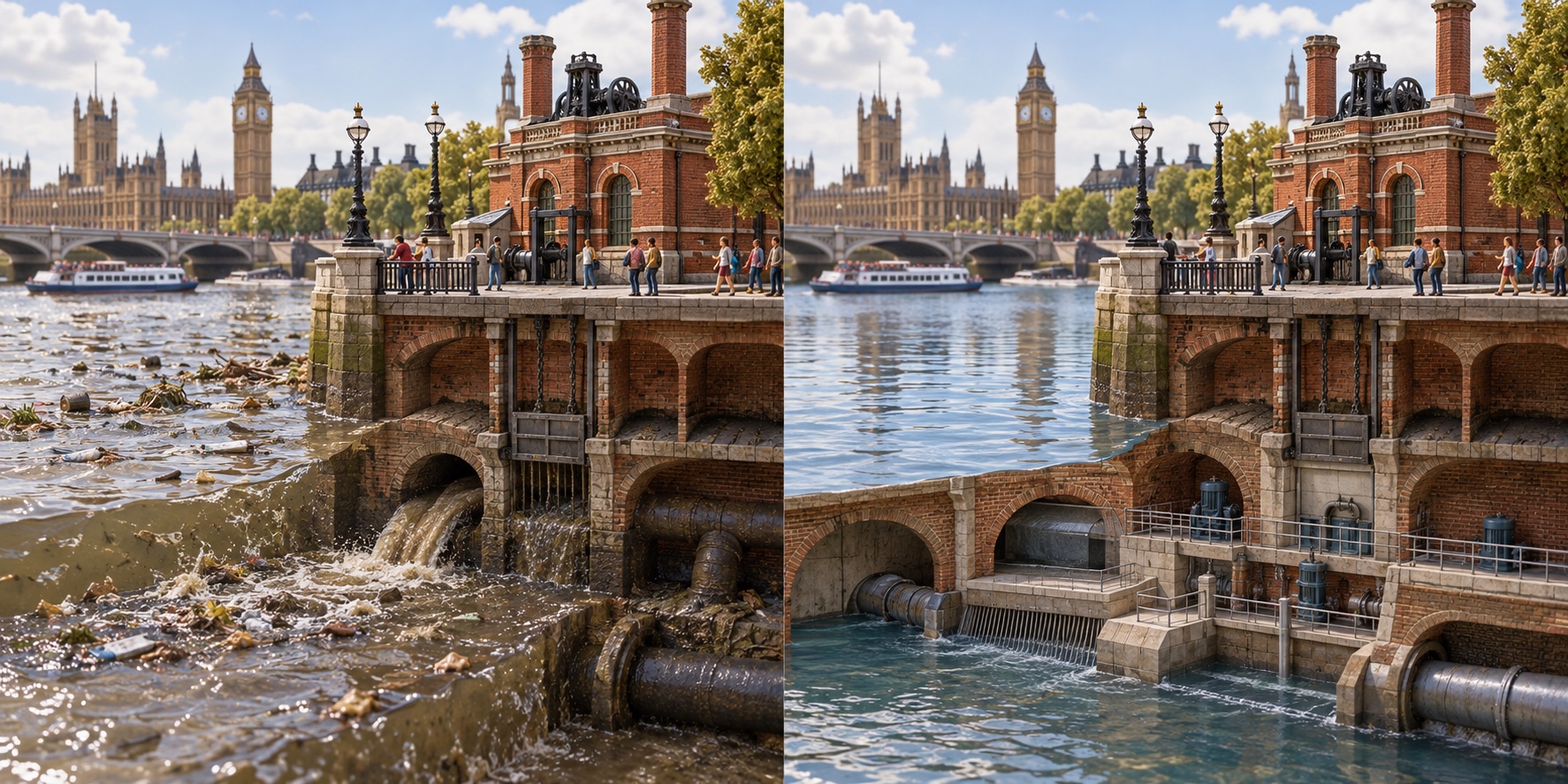
How the change works
- 01 / Public decision
Network and purification
- 02 / Physical change
Collected and treated wastewater
- 03 / Possible outcome
Less river contamination
Separating contaminated water from living spaces and treating it before it is discharged is a fundamental infrastructure for health and the river.
Research and local documents ↓What the evidence tells us
Bazalgette's historic projects document the construction of London's great sewers. The city's water strategy also shows why maintenance, capacity and rain management remain necessary.
Putting the choices into practice
Collection
The challengeDirect drain
The responseSewerage and treatment
Rains
The challengeUncontrolled sewer overflows
The responseCapacity and control
Verification
The challengeNetwork invisible to citizens
The responseData on discharges
The diagram compares choices and conditions for putting them into practice. Measured outcomes and their limits are discussed in the evidence.
Research and local documents ↓Conditions and limits
A sewer network does not automatically eliminate drains: in mixed networks, heavy rain can cause spills. Historic London and current London have different problems and capacities.
Other possible benefits
Protection of public health and greater reliability of urban services.
Research and local documents
- Local project or policy documentGreater London Authority · Water Strategy, 2011 ↗
Institutional documentation of the program, territory or rules mentioned.
- Local project or policy documentThe National Archives · drawings of the Bazalgette sewer system ↗
Institutional documentation of the program, territory or rules mentioned.

