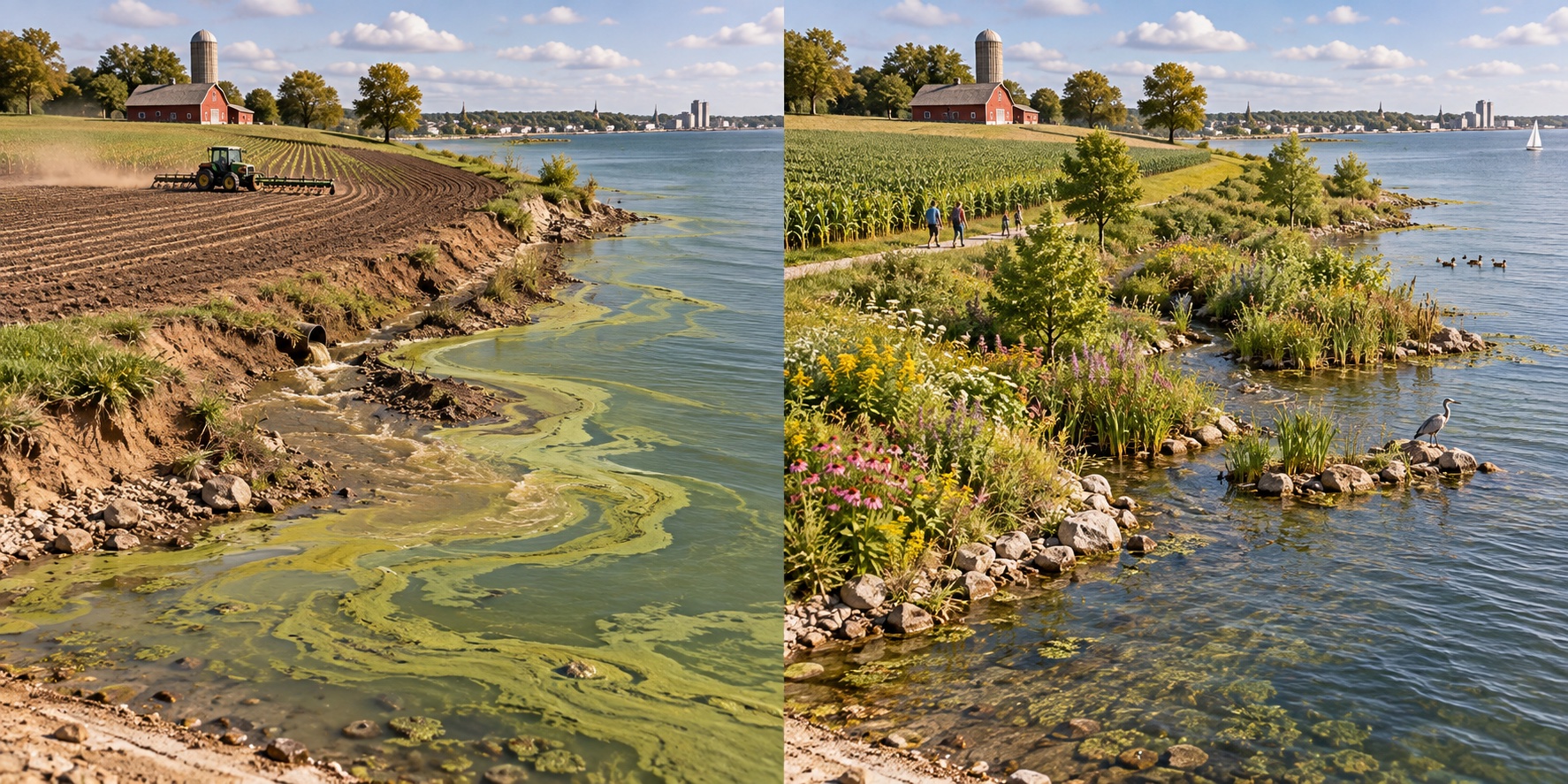
How the change works
- 01 / Public decision
Basin objectives
- 02 / Physical change
Reduction of nutrient losses
- 03 / Possible outcome
Reduced pressure on blooms
To contain algal blooms, it is necessary to reduce the nutrients that reach the lake, intervening on agricultural and urban sources.
Research and local documents ↓What the evidence tells us
The plan for Lake Erie defines a goal of reducing phosphorus by 40% compared to the reference indicated in the program. It is a management goal, not a proven result.
Putting the choices into practice
Sources
The challengeInterventions on a single drain
The responseAgriculture and cities
Objective
The challengePercentage presented as a result
The responseTarget with reference
Verification
The challengeApproved plan only
The responseNutrient loads and lake response
The diagram compares choices and conditions for putting them into practice. Measured outcomes and their limits are discussed in the evidence.
Research and local documents ↓Conditions and limits
Rain, type of phosphorus and seasonality influence blooms. The achievement of the target and the ecological response must be measured, not deducted from the approval of the plan.
Other possible benefits
Protection of water resources and recreational uses of the lake.
Research and local documents
- Local project or policy documentUS EPA · U.S. Action Plan for Lake Erie ↗
Institutional documentation of the program, territory or rules mentioned.

