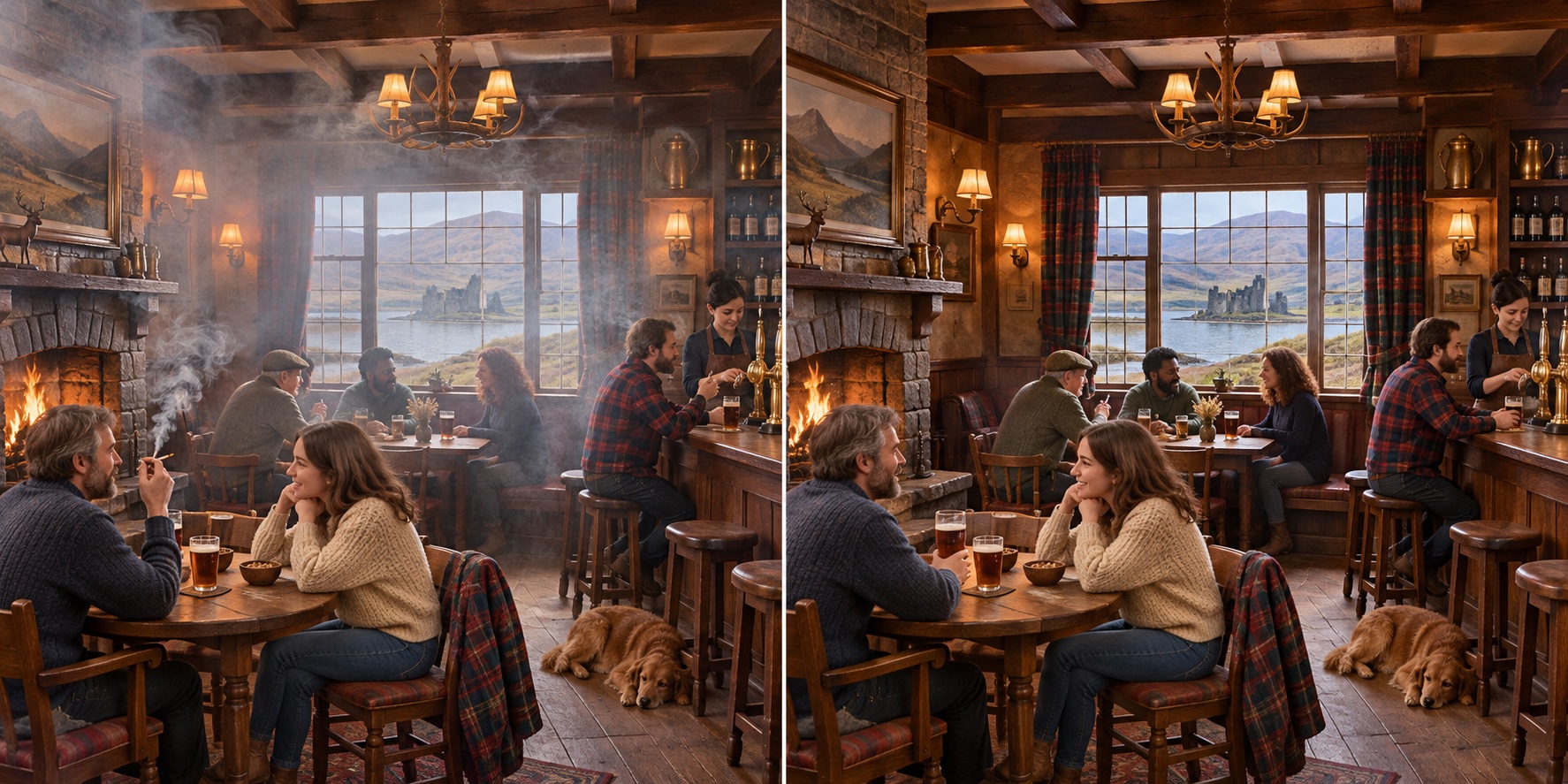
How the change works
- 01 / Public decision
Shared rules
- 02 / Physical change
Less second-hand smoke
- 03 / Possible outcome
Protected health and work
A smoke-free environment protects even those who have not chosen to smoke, including workers and customers.
Research and local documents ↓What the evidence tells us
The Scottish legislation came into force in March 2006. Pell and colleagues evaluated hospitalizations for acute coronary syndrome after the measure.
Putting the choices into practice
Choice
The challengeSmoke imposed on those present
The responseSmoke-free spaces
Work
The challengeExposure during the shift
The responseProtected workers
Outcome
The challengeAssumed climate benefits
The responseHealth and exposure
The diagram compares choices and conditions for putting them into practice. Measured outcomes and their limits are discussed in the evidence.
Research and local documents ↓Conditions and limits
It is a public health policy: health outcomes do not measure climate savings. The comparison is not randomized.
Other possible benefits
Protection against unintentional exposure indoors.
Research and local documents
- Local document and reported findingPell et al., 2008 · Smoke-free legislation and hospitalizations for acute coronary syndrome ↗
Research on the case, mechanism, or measures discussed in the sheet.
- Local project or policy documentScottish Government · Smoke-Free Law Enforcement ↗
Law of 2005 and regulations that came into force on 26 March 2006.

